

Friday Afternoon Tea: Ideas, Recipes, and Tips for a Relaxing Weekly Ritual
There is a moment every Friday afternoon when the week starts to release its grip. Most people waste it scrolling or staring at a screen. What if you used it for something genuinely restorative instead? Friday afternoon tea transforms that transition from workweek to weekend into a deliberate ritual, one that combines great flavour, genuine calm, and the kind of simple pleasure that actually sticks with you.
This guide covers everything: the history behind the tradition, the ingredients worth keeping on hand, the recipes that work consistently, and the small details that separate a rushed cup from a proper ritual. Whether you are hosting friends or sitting down alone with a good book, this is how to do it well.
What Friday Afternoon Tea Actually Is (And Why It Matters)
Friday afternoon tea is not just a cup of tea at four o’clock. It is a structured pause, a deliberate weekly ritual that combines a carefully brewed pot of tea with a small spread of sweet and savoury bites. The format can be as simple or as elaborate as you like, but the intention is always the same: to mark the end of the week with something warm, unhurried, and genuinely enjoyable.
The distinction matters because it changes how you approach it. This is not a tea break you squeeze between tasks. It is a proper stop, a signal to yourself and anyone joining you that the week is done and something better is beginning.
The Origins of Afternoon Tea
The formal tradition traces directly back to Anna Maria Russell, the seventh Duchess of Bedford, around 1840. Dinner in Victorian England was served late, sometimes as late as eight or nine in the evening, leaving an uncomfortable gap after lunch. The Duchess began requesting a tray of tea, bread, butter, and cake in the mid-afternoon and soon extended the habit into a social occasion by inviting friends to join her.
The practice spread quickly through British upper and middle-class society. Within two decades, the three-tiered cake stand, the finger sandwiches, the scones with clotted cream and jam, and the delicate pastries had evolved from informal necessity into a recognisable cultural institution.
Today, the UK Tea and Infusions Association reports that Britain consumes approximately 100 million cups of tea every single day. That figure reflects how deeply embedded the habit remains, not as ceremony, but as a genuine daily practice. Understanding this history makes clear that afternoon tea was never meant to be pretentious. At its core, it was always a practical solution to a human need: a pause, some nourishment, and a moment of pleasant company.
Why Friday Is the Ideal Day for a Tea Ritual
Friday afternoon carries a particular psychological quality that no other day of the week replicates. The workweek is closing. The weekend is opening. That transition deserves a deliberate moment of celebration rather than simply collapsing onto the couch or refreshing your inbox one final time.
In practice, I have experimented with different days for a weekly tea ritual and Friday wins every time. Friends are more available. Family members tend to arrive home earlier. The shared desire to wind down creates a natural social energy that makes hosting feel easy rather than effortful.
There is also a productivity argument worth taking seriously. Research from the University of Illinois found that brief, structured breaks restore attention and reduce decision fatigue more effectively than grinding through to the end of the day. Giving yourself permission to fully stop on Friday afternoon is not laziness. It actively improves how you begin the following week.
How a Weekly Friday Afternoon Tea Supports Wellbeing
The relaxation benefits of a regular afternoon tea ritual go well beyond having a warm drink.
A 2018 study published in the journal Psychopharmacology found that regular tea consumption was associated with lower levels of perceived stress and measurably improved calmness. The mechanism involves L-theanine, an amino acid naturally present in tea leaves that promotes relaxed alertness without the jitteriness that caffeine alone produces. The combination of moderate caffeine and L-theanine found in a quality black or green tea creates a focused but calm mental state that is genuinely different from coffee.
Beyond biochemistry, the ritual structure itself carries value. Anthropologists and behavioural scientists have noted that personal rituals, even small domestic ones, create psychological anchors that signal safety, pleasure, and transition. The act of warming the teapot, selecting a blend, and arranging the plate is part of the benefit, not just the preamble to it. Many people who practice a consistent friday afternoon tea at home report that skipping it leaves Friday feeling unfinished in a way that is hard to articulate but easy to feel.
The Social Dimension of a Friday Tea Gathering
Hosting a small friday afternoon tea gathering, even an informal one, consistently produces something that larger social events rarely manage: genuine, unhurried conversation. The scale is right. Two to six people, a table worth of food, a pot of tea that needs tending, and an atmosphere that is naturally slow and warm.
Over the past few years, I have hosted weekly friday tea sessions where guests each brought one contribution, a favourite biscuit, a homemade jam, or a small cake. What started as a simple experiment became an event people genuinely looked forward to. The regularity mattered as much as the occasion itself.
Choosing the Right Tea Blends for Friday Afternoon
The tea you select shapes the entire experience. For a friday afternoon tea with a lighter, Positive Thursday Morning celebratory end-of-week energy, specific blends perform better than others.
Here are the ones worth keeping in rotation:
- Earl Grey: Bergamot oil gives this classic a floral, uplifting quality that suits a celebratory Friday energy well. Twinings Original Earl Grey is a reliable everyday choice that rarely disappoints.
- Darjeeling First Flush: Often called the “champagne of teas,” Darjeeling has a light, muscatel character that feels special without being heavy. It pairs beautifully with delicate finger sandwiches.
- Assam: A robust, malty black tea that holds up well with milk and works perfectly alongside richer savoury bites and buttery scones.
- Lapsang Souchong: For autumn and winter Friday afternoons, this smoky Chinese black tea adds depth and warmth. It pairs particularly well with smoked salmon sandwiches.
- Chamomile or Lavender Herbal: For caffeine-free options or when hosting an early evening Friday tea, a high-quality herbal blend extends the ritual without disrupting sleep.
Brewing Correctly Makes a Real Difference
The mistake most people make here is under-brewing or using water that is the wrong temperature. For black teas, use water just off the boil and steep for three to four minutes. Green and white teas need cooler water, around 80 degrees Celsius, and should steep no longer than two minutes to avoid bitterness.
Always brew loose leaf when you can, using one heaped teaspoon per cup plus one extra for the pot. Warm the teapot first by filling it with hot water, emptying it, and then adding your leaves. The difference in flavour between a properly brewed loose leaf tea and a rushed teabag cup is significant enough to be worth the two extra minutes.
Essential Pantry Ingredients for Your Friday Afternoon Tea Spread
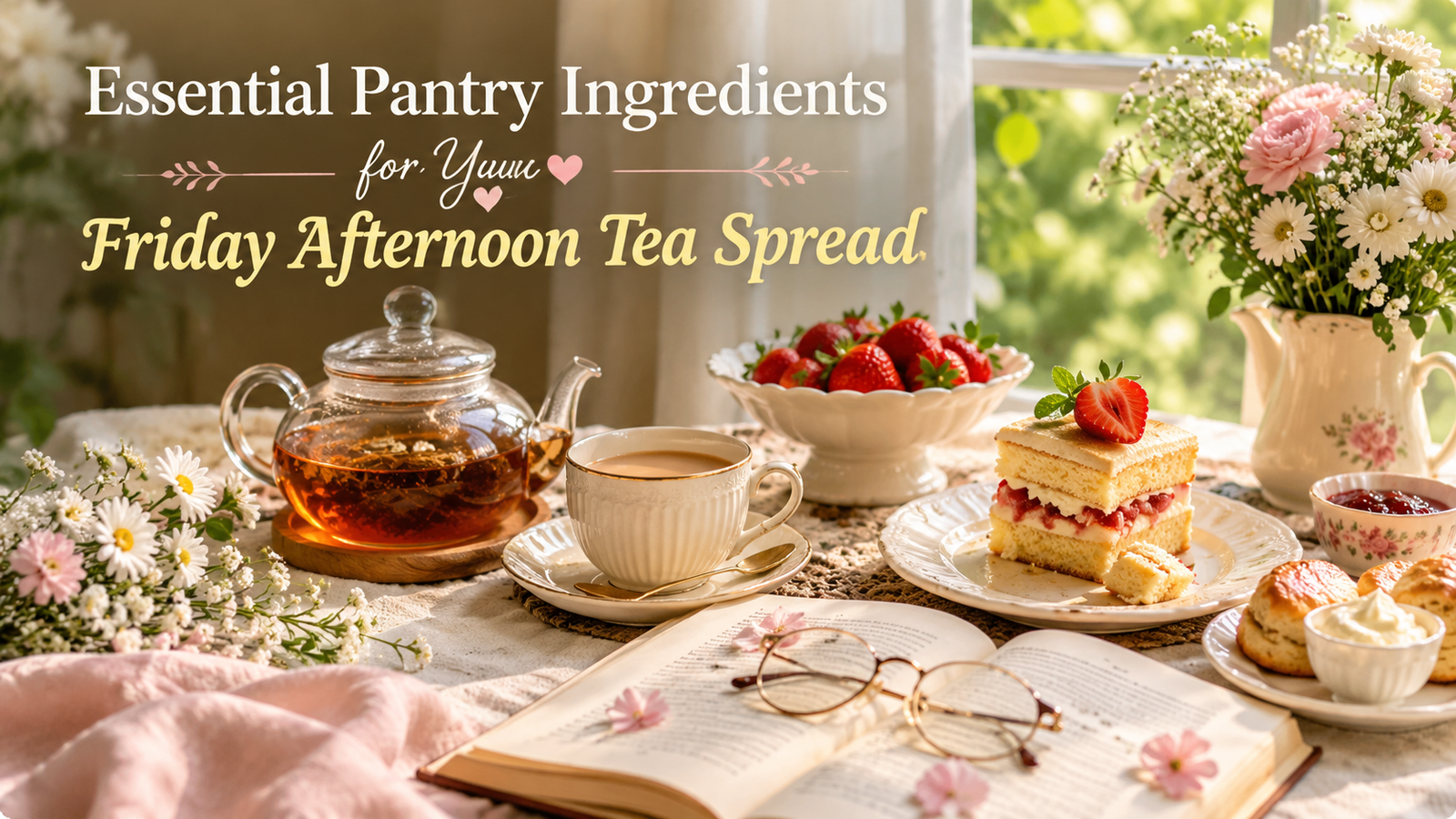
A well-stocked pantry means your friday afternoon tea comes together in under fifteen minutes, even after a long week. The goal is having the right foundations ready so that fresh ingredients do most of the work on the day.
Keep the following stocked consistently:
- Plain flour and self-raising flour for scones, shortbread, and simple cakes
- Good quality unsalted butter (the flavour difference in baked goods is genuinely significant)
- Clotted cream, or a thick double cream as a substitute
- Strawberry or raspberry jam with a high fruit content
- Caster sugar and icing sugar for baking and finishing
- Eggs for richness and binding in almost every recipe
- Cucumber, smoked salmon, and good quality white sandwich bread for classic finger sandwiches
- Full-fat cream cheese and fresh herbs for versatile fillings
- Lemon curd as a tangy alternative to jam that works beautifully with scones
Batch-baking scones on Thursday evenings is one of the most practical adjustments I have made to my friday tea routine. It means Friday setup takes fifteen minutes rather than an hour, and the scones are actually better the next day after resting overnight.
Seasonal Ingredients That Keep the Ritual Fresh
One of the real pleasures of a consistent friday afternoon tea practice is how seasonal ingredients prevent it from becoming repetitive. Each quarter brings fresh combinations worth exploring.
In spring, strawberries, edible flowers like violets and nasturtiums, rhubarb curd, and asparagus tips in savoury bites bring lightness and colour to the table.
In summer, peaches, raspberries, elderflower cream, and cucumber with fresh mint create a refreshing spread that pairs beautifully with cold-brewed iced tea served alongside the hot pot. A cold-brew option alongside a traditional hot pot is one of the most appreciated small touches you can offer guests at a friday afternoon tea party in warm weather.
In autumn, pumpkin spice scones, blackberry jam, fig and brie crostini, and warming chai blends shift the whole mood toward comfort and richness.
In winter, mince pies, clementine drizzle cake, cranberry cream cheese sandwiches, and a strong Assam brew bring festivity without requiring significant extra effort.
The Best Friday Afternoon Tea Recipes to Make at Home
These are the recipes I return to most consistently. Each has been tested across multiple Friday sessions, refined based on what actually works, and approved by guests who do not hold back their opinions.
Classic Finger Sandwiches
Finger sandwiches form the savoury foundation of any proper afternoon tea spread. Three principles make the difference between elegant and disappointing: remove the crusts cleanly, keep fillings generous but not overstuffed, and cut with a sharp, thin-bladed knife in a single confident stroke.
Smoked Salmon and Cream Cheese on Brown Bread
- Spread cream cheese generously on both slices
- Layer smoked salmon, a few capers, and a squeeze of lemon
- Add a thin strip of cucumber for freshness
- Cut into rectangles or triangles and refrigerate until needed
Cucumber and Dill Butter on White Bread
- Whip unsalted butter with fresh dill and a pinch of flaked sea salt
- Slice cucumber paper-thin using a mandoline if you have one
- Spread the dill butter, layer cucumber, and finish with a crack of white pepper
Egg Mayonnaise and Watercress on Malted Bread
- Use good quality mayonnaise, not the low-fat variety
- Season well with mustard, salt, and pepper
- The watercress adds a peppery bite that stops the filling from being too rich
Each sandwich variety serves four people comfortably from six slices of bread. Prepare them no more than two hours ahead and keep covered with a lightly damp cloth in the refrigerator.
Traditional Scones
A well-made scone is the centrepiece of a friday afternoon tea spread. The recipe is simple but unforgiving about one thing: do not overwork the dough.
Ingredients (makes 8 to 10 scones):
- 450g self-raising flour
- 1 teaspoon baking powder
- Pinch of salt
- 85g cold unsalted butter, cubed
- 4 tablespoons caster sugar
- 2 eggs, beaten
- 150ml whole milk, plus extra to glaze
Method:
- Preheat your oven to 220 degrees Celsius (200 fan).
- Sift flour, baking powder, and salt into a large bowl.
- Rub the cold butter into the flour until the mixture resembles breadcrumbs. Cold butter is essential for a light, flaky result.
- Stir in the sugar.
- Add the beaten eggs and enough milk to bring the dough together into a soft but not sticky consistency.
- Turn out onto a lightly floured surface and pat to a thickness of about 4cm. Do not roll. Patting preserves air in the dough.
- Cut with a straight-edged cutter, pressing directly down without twisting. Twisting seals the edges and prevents rising.
- Brush the tops with milk and bake for 12 to 15 minutes until golden.
- Cool on a rack for at least ten minutes before serving.
Serve with clotted cream and jam. The great British debate about which goes on first, cream or jam, is regional: Devon tradition places cream first, while Cornwall insists on jam first. Both approaches work. Pick a side and commit to it.
Simple Lemon Drizzle Loaf
A lemon drizzle loaf is the ideal friday afternoon tea cake because it requires minimal skill, keeps well for several days, and delivers a bright, clean flavour that works with almost every tea blend.
Ingredients:
- 225g unsalted butter, softened
- 225g caster sugar
- 4 eggs
- 225g self-raising flour
- Zest of 2 lemons
- Juice of 1.5 lemons
- 3 tablespoons icing sugar for the drizzle
Method:
- Preheat oven to 180 degrees Celsius (160 fan). Grease and line a 900g loaf tin.
- Beat butter and sugar together until pale and fluffy, about four to five minutes with an electric mixer.
- Add eggs one at a time, beating well between each addition.
- Fold in flour gently, then stir in lemon zest.
- Pour into the tin and bake for 45 to 50 minutes, until a skewer inserted in the centre comes out clean.
- While the cake is still warm, mix lemon juice and icing sugar into a thin drizzle and pour slowly over the surface, allowing it to soak in rather than pool.
- Cool completely before slicing.
Friday Afternoon Tea Ideas for Different Occasions and Budgets
The format adapts well to a wide range of situations, which is part of what makes it such a durable weekly ritual.
For a Solo Friday Tea at Home
Keep it simple. One good tea, two or three small bites, and something to read. The point is the pause, not the spread. A solo friday afternoon tea at home is just as valid as a hosted gathering. A cup of Darjeeling, two warm scones, and thirty minutes without a screen is a legitimate act of self-care.
For a Small Friday Tea Gathering
Aim for three savoury options, two sweet, and two tea varieties (one caffeinated, one herbal). Set the table properly, including a tablecloth, real cups rather than mugs, and a small vase of flowers if you have them. These details signal to guests that this time is worth their full attention.
For a Friday Afternoon Tea Party on a Budget
A full afternoon tea spread does not require specialist ingredients or significant expense. Own-brand flour and butter perform identically to premium versions in baking. Supermarket own-brand Earl Grey and Assam are consistently decent. The spread looks abundant when you use a tiered stand, real crockery, and small portions arranged carefully. Presentation accounts for more than ingredient cost.
For Children or Guests Who Prefer Low-Caffeine Options
Herbal infusions, fruit teas, and naturally caffeine-free rooibos are all genuine options that work within a friday afternoon tea format. For children, a “tea party” with fruit juice in proper cups, mini sandwiches, and small fairy cakes creates the same sense of occasion and is genuinely something they remember.
Setting Up Your Friday Afternoon Tea: The Practical Details
The physical setup of your tea ritual matters more than most guides acknowledge. Getting this right takes ten minutes and makes the experience substantially better.
Use a proper teapot. Brewing tea directly in mugs, especially for guests, produces an inferior result and misses the ceremonial aspect of the ritual. A ceramic or cast iron pot retains heat well and looks right on the table.
Warm the pot before brewing. Fill it with boiling water, wait thirty seconds, empty it, and then add your leaves. This single step improves flavour noticeably.
Set out the food before the tea is brewed. Sandwiches should be covered until the moment of serving. Scones should be warm but not hot. Cakes should be sliced in advance so guests can help themselves without ceremony.
Use a timer for brewing. It sounds minor, but consistently hitting the right steep time is the difference between a tea that is bitter and astringent and one that is smooth and nuanced.
Key Takeaways
- Friday afternoon tea works because Friday’s psychological energy, the transition from workweek to weekend, makes a deliberate ritual feel natural and earned rather than forced.
- Research supports both the stress-reducing effects of tea (specifically L-theanine) and the psychological value of personal rituals as anchors for wellbeing.
- A well-stocked pantry and Thursday batch-baking reduce Friday setup time to fifteen minutes or less, making the
Conclusion
I think Friday Afternoon Tea is a way to enjoy a relaxing afternoon with delicious tea, light refreshments and good company. Whether Friday Afternoon Tea is planning a gathering or a special occasion Friday Afternoon Tea offers a pleasant and memorable experience.
Frequently Asked Questions
What is Friday Afternoon Tea?
Friday Afternoon Tea is a calming gathering where people enjoy tea, sandwiches, pastries, cakes and other light refreshments.
What time is afternoon tea usually served?
Afternoon tea is usually served in the afternoon between 2:00 PM and 5:00 PM depending on the venue or event.
What food is served at afternoon tea?
Afternoon tea may include finger sandwiches, scones, cakes, pastries, biscuits and a selection of teas.
Can Friday Afternoon Tea be arranged for occasions?
Friday Afternoon Tea can be arranged for occasions. Friday Afternoon Tea can be an option for birthdays, bridal showers, family gatherings, celebrations or casual get-togethers.
What types of tea can be served?
Popular options for tea include tea, green tea, herbal tea, fruit tea and flavored tea.
Is afternoon tea suitable, for children?
Yes. Children can enjoy afternoon tea especially when the menu includes kid‑friendly snacks and caffeine‑free drinks.






Leave a Reply