
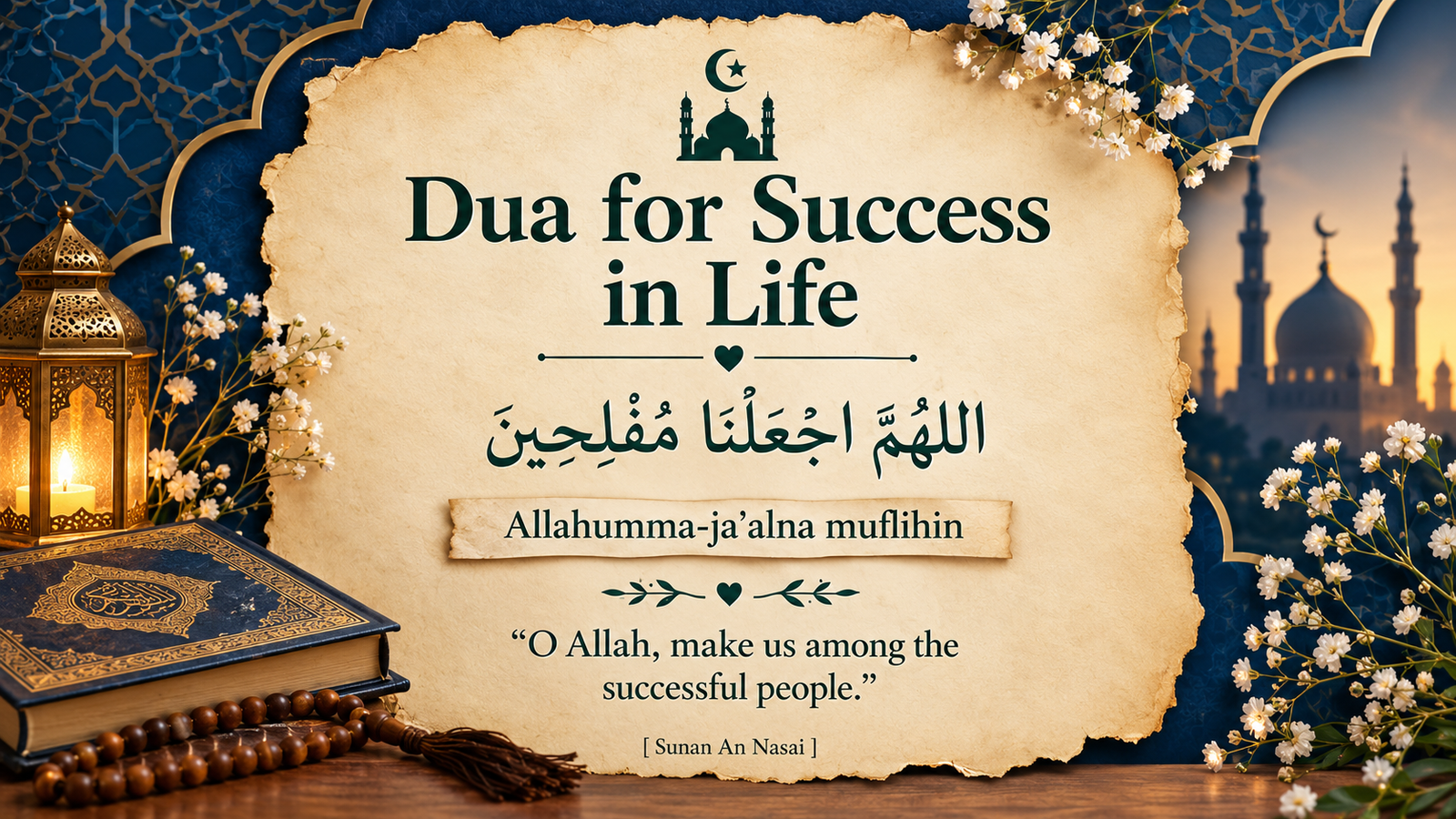
Dua for Success in Life: Powerful Supplications That Actually Work
A sincere dua for success in life does more than comfort you in difficult moments. It restructures how you think about effort, outcomes, and your relationship with Allah (SWT). Whether you are a student preparing for finals, a professional navigating a competitive job market, or someone building a meaningful life while staying grounded in your faith, dua is one of the most consistently underutilized tools in a Muslim’s daily routine.
This guide walks you through the most powerful duas from the Quran and Sunnah, explains the theology behind why they work, and gives you a practical system for making them part of your daily life right now.
What Dua Actually Means and Why It Matters for Real-World Success
Most people have a surface-level understanding of dua. They know it means supplication. But the full picture is more precise and more powerful than that.
The Arabic word “dua” (دعاء) literally translates to “calling out” or “invocation.” In Islamic theology, dua is the act of a servant directly addressing Allah (SWT) with a request, a praise, or an expression of genuine need. The Prophet Muhammad (peace be upon him) described dua as “the essence of worship” in a hadith recorded by Imam Tirmidhi, dua for success in life placing it at the very center of a believer’s spiritual life. That is not a casual designation. It means that calling upon Allah is, in itself, an act of worship independent of whether the request is granted in the way you expected.
What makes dua unique among Islamic acts of worship is its radical accessibility. Salah follows a structured format with specific postures and prescribed recitations. Zakat has defined percentages and conditions attached to it. Dua has none of those constraints. You do not need wudu to make dua. You do not need a mosque, dua for success in life a specific time of day, or a formal setting. That openness is itself a mercy built into the architecture of the religion.
Here is the theological point that changes how you approach daily goals: dua is not passive hoping or wishful thinking. It is an active acknowledgment that ultimate power belongs to Allah (SWT) and that human effort, no matter how disciplined and sustained, is incomplete without divine facilitation. Once you internalize that, the dua for success in life stops feeling like a ritual addition to your routine and starts feeling like the foundation beneath everything else you do.
The Quranic Promise That Backs Every Dua for Success in Life
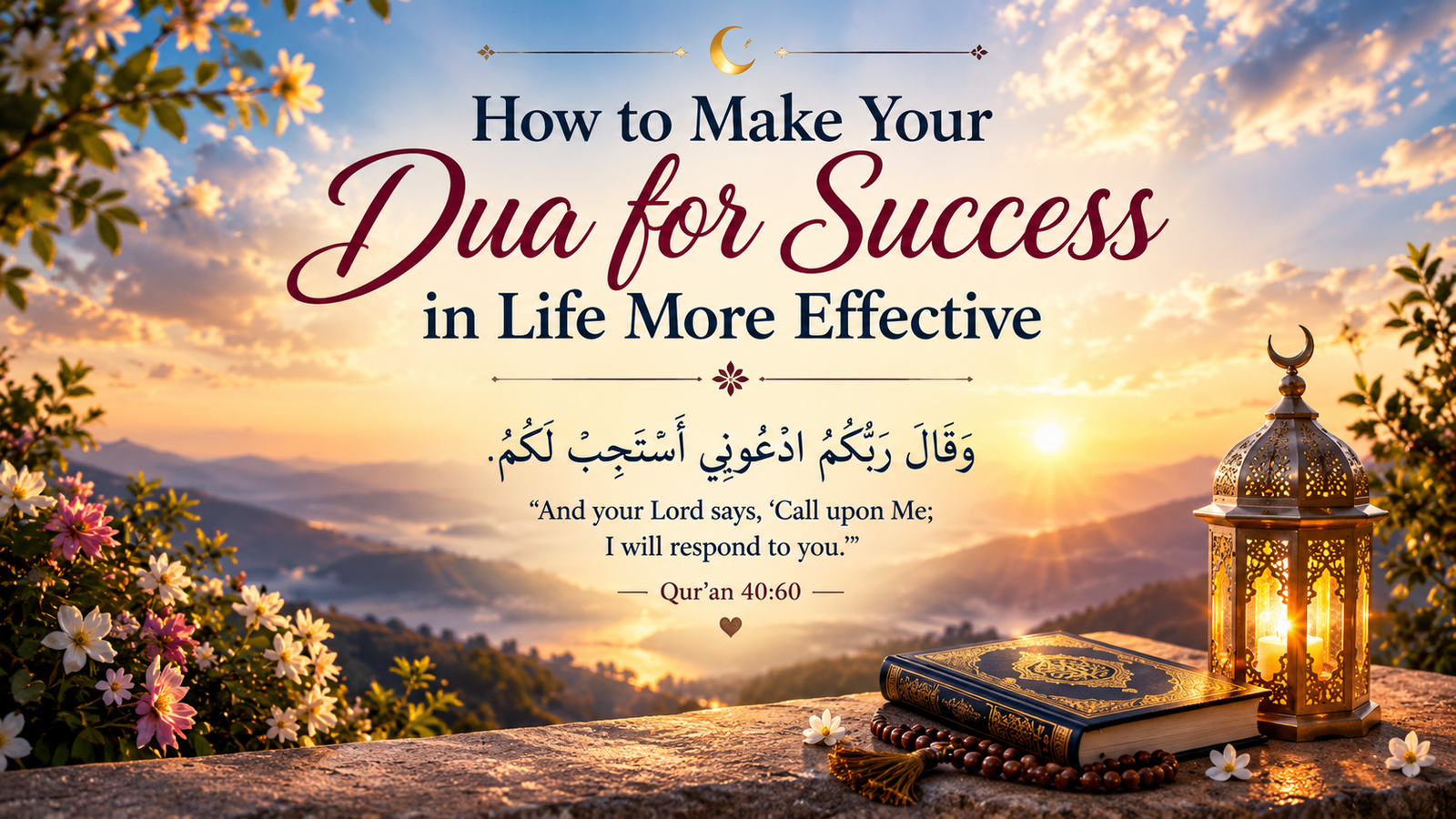
Before examining specific supplications, it helps to anchor yourself in the clearest divine statement on the subject. In Surah Ghafir (40:60), Allah (SWT) says directly:
“Call upon Me, I will respond to you.”
This is not a metaphor or an allegory. It is a direct promise from the Creator to every sincere believer who turns to Him. The practical implication reaches into every corner of your ambitions. Your career goals, your academic targets, your financial aspirations, your desire for a stable and loving family, all of these are legitimate and encouraged subjects of dua. Islam does not separate worldly success and spiritual success into competing categories. A Muslim is encouraged to pursue excellence in both realms simultaneously, dua for success in life and the most powerful Quranic duas reflect exactly that integration.
Many Muslims living in the West experience a disconnect between their spiritual lives and their professional ambitions. They attend Jumu’ah on Friday and then operate in a completely different mental framework from Monday through Friday. Dua is the bridge that closes that gap. When you make specific supplications before a job interview, dua for success in life before sending a business proposal, or before sitting down to study, you bring your faith into direct contact with your daily goals. The two stop being parallel tracks and become one road.
Powerful Dua for Success in Life Directly From the Quran
The Quran contains verses that function as complete, ready-to-use supplications. These are not verses merely about success. They are the actual words believers have used throughout Islamic history to ask Allah (SWT) for guidance, ease, and achievement. They carry a spiritual authority and historical depth that no self-help mantra can replicate.
Surah Al-Baqarah 2:201 for Worldly and Spiritual Success
One of the most frequently recited duas in Islamic history appears in Surah Al-Baqarah, verse 201:
Arabic: “Rabbana atina fi’d-dunya hasanatan wa fi’l-akhirati hasanatan wa qina ‘adhab an-nar.”
Translation: “Our Lord, give us good in this world and good in the Hereafter, and protect us from the punishment of the Fire.”
What makes this supplication remarkable is its deliberate scope. It does not ask only for worldly success. It does not retreat into pure spiritualism either. It boldly requests excellence in both realms within a single breath. The Arabic word “hasanah” (حسنة) encompasses goodness in the broadest possible sense: health, dua for success in life provision, righteous family, satisfying work, spiritual contentment, and moral integrity all fall within its meaning.
This is genuinely a dua for success and well-being compressed into one elegant sentence. The Prophet (PBUH) reportedly recited this dua with great frequency, documented in Sahih Bukhari (hadith 4522), making it one of the most authentically supported supplications available.
Surah Ta-Ha 20:114 for Knowledge and Professional Growth
For anyone using dua for success in exams or academic advancement, Surah Ta-Ha verse 114 is non-negotiable:
Arabic: “Rabbi zidni ‘ilma.”
Translation: “My Lord, increase me in knowledge.”
This is one of the shortest duas in the Quran. Its brevity is deceptive. Allah (SWT) commanded the Prophet (PBUH) to say this, dua for success in life which means it carries direct divine endorsement as a supplication. The classical scholar Ibn Kathir noted in his tafsir that this verse establishes knowledge as something that must be actively pursued through both personal effort and sincere supplication. The two are not alternatives; they work together.
Recite this before studying, before entering a classroom, dua for success in life before a meeting where you need clarity, or before any high-stakes situation that requires sharp thinking. If you are a student balancing a demanding academic schedule with your faith commitments, this three-word Arabic phrase is a practical anchor you can use multiple times daily.
Surah Al-Inshirah 94:5-6 for Resilience During Hardship
Surah Al-Inshirah does not follow the traditional supplication format, but its recitation and reflection functions as a deeply grounding Islamic prayer for success during difficult periods. The chapter includes this famous repeated promise:
Arabic: “Fa inna ma’al ‘usri yusra. Inna ma’al ‘usri yusra.”
Translation: “For indeed, with hardship will be ease. Indeed, with hardship will be ease.”
Allah (SWT) repeats this assurance twice in consecutive verses. Classical Quranic scholars, including Imam Al-Tabari, explained that the Arabic grammatical construction here is deliberate: the word for hardship carries a definite article, dua for success in life making it singular and specific, while the word for ease is indefinite, implying multiple and varied forms of relief. One difficulty brings more than one relief. That is the divine math built into this passage.
Returning to this surah during professional setbacks, academic failures, or personal struggles transforms your perspective from “this is permanent” to “ease is already on its way.”
Authenticated Duas From the Sunnah for Achieving Specific Goals
Beyond the Quran, the Hadith literature preserves hundreds of supplications made by the Prophet Muhammad (PBUH) and taught directly to his companions. These Sunnah-based duas provide a practical vocabulary for anyone seeking a dua for achieving goals with textual grounding and scholarly authentication.
The Morning Dua for Beneficial Knowledge and Provision
Among the most powerful morning supplications recorded in Sahih Muslim is this comprehensive dua:
Arabic: “Allahumma inni as’aluka ‘ilman nafi’an, dua for success in life wa rizqan tayyiban, wa ‘amalan mutaqabbalan.”
Translation: “O Allah, I ask You for beneficial knowledge, pure provision, and accepted deeds.”
This single dua touches three dimensions of success simultaneously:
- Beneficial knowledge: Not raw information, but wisdom you can act on ethically and effectively.
- Pure provision: Halal income and sustenance that carries blessings rather than hidden costs.
- Accepted deeds: The confirmation that your worship and effort actually count before Allah (SWT).
Reciting this immediately after Fajr, before you open your phone or begin your workday, sets a clear intentional framework for the hours ahead. The mistake most people make is treating morning duas as perfunctory recitation. Say this one slowly, once, with full attention to its meaning, dua for success in life and let it shape your priorities for the day.
The Dua of Prophet Ibrahim for Generational Success
Prophet Ibrahim (AS) is described in the Quran as “Khalilullah,” the intimate friend of Allah. His supplications appear throughout the Quran, and they consistently reveal a man who thought in terms of lasting legacy rather than short-term gain. In Surah Ibrahim (14:40-41), dua for success in life he made this supplication:
Arabic: “Rabbi-j’alni muqima as-salati wa min dhurriyyati, dua for success in life Rabbana wa taqabbal du’a.”
Translation: “My Lord, make me an establisher of prayer, and from my descendants. Our Lord, and accept my supplication.”
Notice the structure. Prophet Ibrahim asked for righteousness in himself first before extending that blessing outward to his family and descendants. This is a dua for lasting, generational success rooted in personal spiritual integrity rather than material accumulation alone. For anyone thinking about career success in the context of raising a family, building a business, or leaving behind something meaningful, this supplication reframes what “success” actually means.
The Dua of Prophet Musa for Divine Support and Open Doors
Surah Ta-Ha (20:25-28) contains the dua Prophet Musa (AS) made before one of the most consequential conversations in human history: standing before Pharaoh to demand the freedom of an enslaved people. He said:
Arabic: “Rabbi ishrah li sadri, wa yassir li amri, wahlul ‘uqdatan min lisani, yafqahu qawli.”
Translation: “My Lord, expand for me my chest, ease for me my task, and untie the knot from my tongue so they may understand my speech.”
This is a dua for success in communication, leadership, dua for success in life and high-pressure situations. The three requests are precise and practical:
- An expanded chest refers to emotional capacity, patience, dua for success in life and psychological steadiness.
- Ease in the task acknowledges that external circumstances need divine facilitation.
- Clear speech directly addresses the fear of being misunderstood or inarticulate when it counts most.
If you have a difficult conversation ahead, dua for success in life a presentation, a negotiation, or a job interview, this supplication is directly applicable and authentically transmitted.
The Dua of Prophet Yusuf for Career Openings
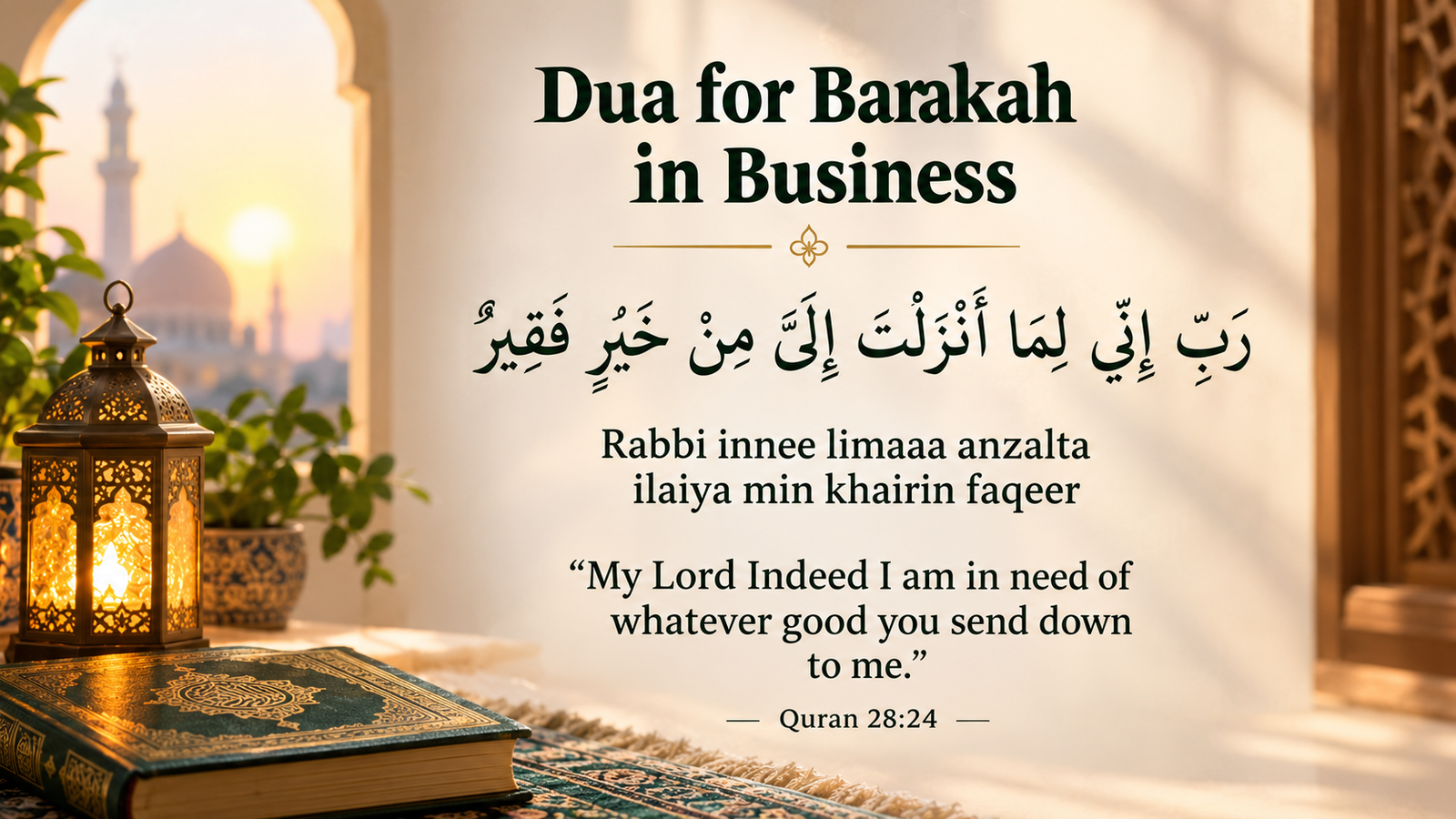
In Surah Al-Qasas (28:24), Prophet Musa (AS) made another brief but comprehensive supplication after arriving in a foreign land with nothing:
Arabic: “Rabbi inni lima anzalta ilayya min khayrin faqeer.”
Translation: “My Lord, indeed I am in need of whatever good You would send down to me.”
This short, humble supplication covers financial need, professional opportunity, and spiritual provision without specifying a form. It leaves the nature of the response entirely in Allah’s hands. There is wisdom in that openness. When you are between jobs, starting a new venture, dua for success in life or rebuilding after a setback, this dua expresses complete reliance while acknowledging that Allah’s provision may arrive in a form you did not anticipate.
How to Make Your Dua for Success in Life More Effective
Knowing the words is the starting point. What separates a supplication that feels alive from one that feels mechanical is the method and mindset behind it.
Time Your Duas Around the Most Accepted Moments
Islamic scholarship across all major schools of thought identifies specific times when dua is most likely to be accepted:
- The last third of the night: The Prophet (PBUH) said in Sahih Bukhari that Allah descends to the lowest heaven in this period and asks, “Who is calling upon Me that I may answer him?”
- Between the adhan and iqamah: A brief but spiritually charged window before prayer begins.
- After obligatory salah: Particularly after Fajr and Asr.
- On Friday, in the final hour before Maghrib: Referenced in both Sahih Bukhari and Sahih Muslim as a time of heightened divine responsiveness.
- During sujud (prostration): The Prophet (PBUH) said, “The servant is closest to his Lord when he is in prostration, so make many duas there.” (Sahih Muslim)
Follow the Etiquette That Scholars Agree Upon
Classical scholars including Imam Al-Nawawi, in his work “Al-Adhkar,” outlined consistent conditions that maximize the sincerity and effectiveness of any dua for Islamic success:
- Begin with praise of Allah (SWT) using His names and attributes.
- Send salawat (blessings) upon the Prophet Muhammad (PBUH).
- Face the qiblah if possible.
- Raise your hands, palms upward.
- State your need with specificity and honesty.
- End with salawat upon the Prophet again and with “Ameen.”
- Trust the response completely, even if it comes in an unexpected form.
The mistake most people make here is rushing through the dua itself after carefully following the opening etiquette. The body of the supplication deserves the same deliberate attention as the opening and closing.
Combine Dua With Consistent Action
A dua for success in life is not a substitute for preparation, consistency, and skill development. The Islamic framework is clear: dua and amal (action) work together. The Prophet (PBUH) tied his camel before trusting in Allah (SWT). In practice, this means your supplication should accompany your effort, dua for success in life not replace it. Make the dua before studying and then study. Make the dua before the interview and then prepare thoroughly for the interview. The theological point is that you take the human steps within your capacity and then acknowledge that the outcome belongs to Allah (SWT).
Building a Daily Routine Around Dua for Success in Life
Structure matters. Sporadic supplication is better than nothing, but a consistent daily practice produces deeper spiritual integration and a more stable mindset.
Here is a practical framework you can begin today:
- After Fajr: Recite the morning dua for beneficial knowledge, pure provision, and accepted deeds (“Allahumma inni as’aluka…”) along with Surah Al-Baqarah 2:201. These take under two minutes combined.
- Before any important task or meeting: Recite “Rabbi ishrah li sadri…” (the dua of Prophet Musa) and “Rabbi zidni ‘ilma” before any situation requiring clarity or communication.
- During sujud in any salah: Add one specific, personal dua at the end of your prostration. Make it precise. Name the job, the exam, the relationship, the goal.
- In the last third of the night (even occasionally): Wake fifteen minutes before Fajr and make your most important supplications in this window. Even doing this twice a week has a measurable effect on your sense of spiritual connection and intentionality.
- After Asr on Fridays: Reserve this specific window for your most significant long-term goals and deepest personal needs.
Key Takeaways
- The dua for success in life is most effective when paired with deliberate action, not used as a replacement for effort.
- Surah Al-Baqarah 2:201 is the most comprehensive single dua for both worldly and spiritual success, authenticated in Sahih Bukhari.
- The most accepted times for dua include the last third of the night, the moment of sujud, between adhan and iqamah, and the final hour before Maghrib on Fridays.
- Specificity in dua, naming the exact goal, situation, or need, dua for success in life produces greater intentionality and a stronger sense of spiritual engagement.
- Islamic success supplication is not passive. It combines sincere asking with consistent human effort, dua for success in life reflecting the Prophetic example of tying the camel before trusting in Allah.
Frequently Asked Questions
What is the most powerful dua for success in life?
Scholars most frequently cite Surah Al-Baqarah 2:201 (“Rabbana atina fi’d-dunya hasanatan wa fi’l-akhirati hasanatan wa qina ‘adhab an-nar”) as the most complete dua for success in both worldly and spiritual dimensions. It is authenticated in Sahih Bukhari and was reportedly among the most frequently recited
Which dua is best for success in life?
One powerful dua for success is:
زِدْنِي عِلْمًا
Transliteration: Rabbi zidni ilma.
Meaning: My Lord increase me in knowledge. (Quran 20:114)
This dua is special because knowledge is the foundation of success. When you ask Allah to increase your knowledge you are asking for wisdom, clarity and the ability to grow in every area of life. It is a dua that opens doors you may not even see yet.
Which dua should I read for success in my career?
You can recite this dua:
اشْرَحْ لِي صَدْرِي وَيَسِّرْ لِي أَمْرِي
Transliteration: Rabbi ishrah li sadri, wa yassir li amri.
My Lord please widen my chest. Make my task simple and easy for me. (Quran 20:25–26)
This dua brings peace and confidence. It helps you feel calm when work feels overwhelming. When your chest is open and your heart is at ease decisions come clearly. When your task is made easy you find strength in hard situations.
Can I make dua for success in all aspects of life?
Yes you can. You can ask Allah for success in your studies your career, your family, dua for success in life your health and your personal life. There is no limit to what you can ask for long as it is good and in line with what is halal. The key is to pray with sincerity with trust in Allah and to keep trying. Dua is not a spell. It works when paired with effort.
What is the best time to make dua for success?
You can make dua at any time.. Some times are more blessed. The last third of the night is a time when Allah’s closest to His servants.During this hour Allah is nearest, dua for success in life to His servants.You can also make dua during sujood when you are in prostration. That is a moment when your heart’s most humble. Also the time between adhan and iqamah is a window. These are moments when dua’s more likely to be accepted.
Which Quranic dua is best for success in this life and the Hereafter?
A beautiful dua from the Quran is:
رَبَّنَا آتِنَا فِي الدُّنْيَا حَسَنَةً وَفِي الْآخِرَةِ حَسَنَةً وَقِنَا عَذَابَ النَّارِ
Transliteration: Rabbana atina fid-dunya hasanatan wa fil- hasanatan wa qina adhaban-nar.
Meaning: Our Lord grant us good in this world. Good in the Hereafter and protect us from the punishment of the Fire. (Quran 2:201)
This dua covers both worlds. It asks for success here and, dua for success in life in the Hereafter. It teaches us to want good in both places. The world is temporary. The Hereafter is eternal. So we ask for good in both.. We ask to be protected from Hell. This is the balance. This is the dua.






Leave a Reply