
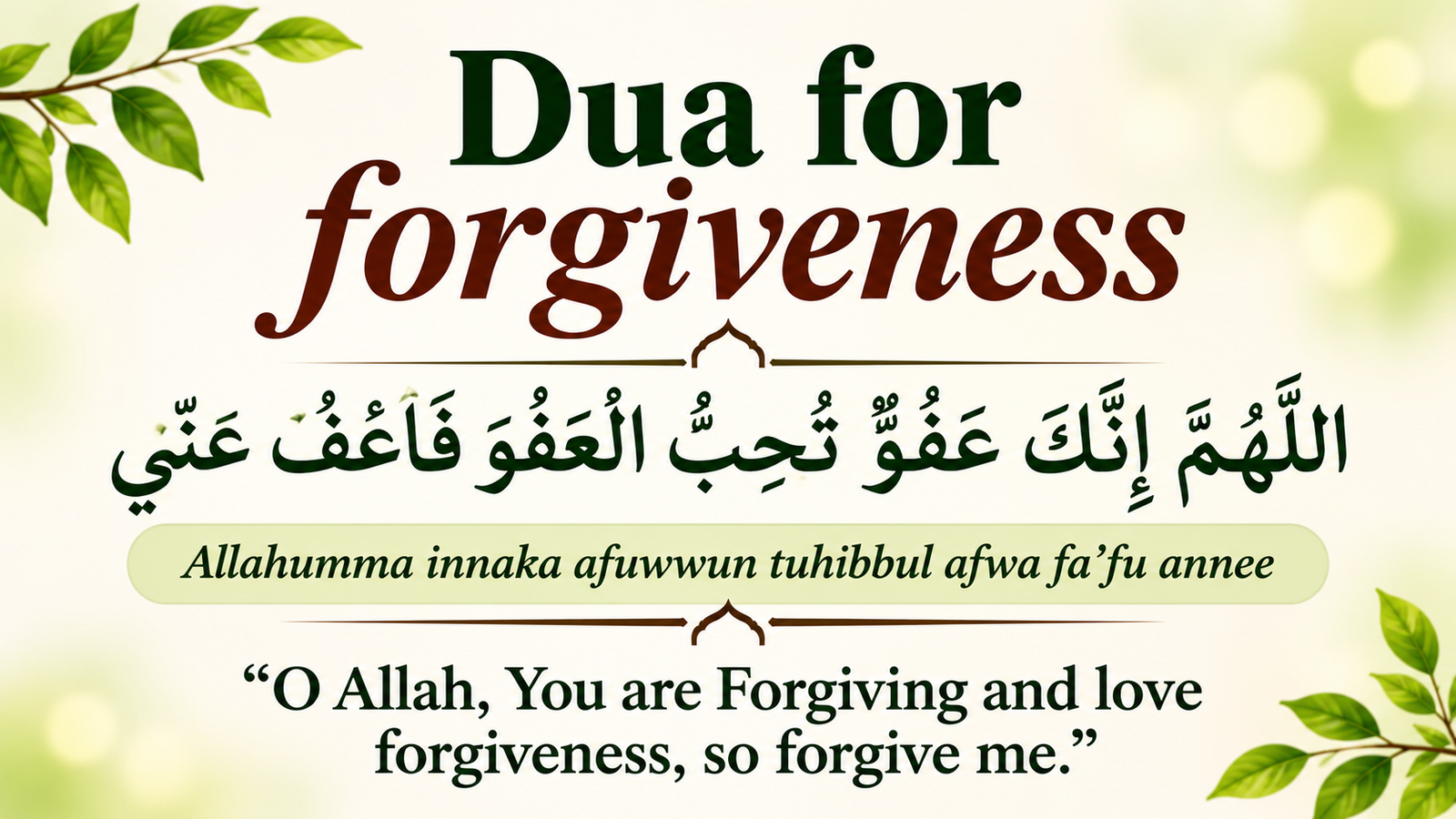
Dua for Forgiveness: Step-by-Step Guide to Seeking Allah’s Pardon
Most Muslims know the feeling: you have made a mistake, the regret sits heavy in your chest, and you desperately want to reconnect with Allah. The dua for forgiveness is one of the most practical and spiritually powerful tools Islam provides, and knowing how to use it correctly makes all the difference. This guide covers every essential supplication, dua for forgiveness the authentic sources behind each one, and a clear step-by-step method for making your repentance sincere and complete.
What Is Dua for Forgiveness and Why Does It Matter
Dua for forgiveness is a direct, personal supplication to Allah in which a believer acknowledges their sins, expresses genuine remorse, and asks for divine pardon. It is not a ritual reserved for major wrongdoings. It is a daily spiritual practice that sits at the very heart of Islamic faith.
Understanding the Concept of Dua in Islam
The word “dua” comes from the Arabic root meaning “to call” or “to invite.” Unlike the prescribed structure of Salah, dua is flexible, intimate, and available at any moment. You do not need a mosque, specific clothing, or a particular time of day. You need an open heart, a sincere intention, and the conviction that Allah hears you.
Classical Islamic scholars placed dua among the highest acts of worship. The Prophet Muhammad (peace be upon him) is authentically recorded as saying, “Dua is worship,” in the collections of Abu Dawud and al-Tirmidhi. This means every sincere supplication you make is itself a devotional act, entirely independent of the visible outcome you receive. That framing matters because it removes the transactional mindset that weakens so many people’s spiritual practice.
Why Seeking Forgiveness Is Central to Muslim Faith
In the Islamic worldview, human fallibility is not a flaw to be ashamed of. It is a reality that Allah has already accounted for. The Quran states in Surah Az-Zumar (39:53): “Say: O My servants who have transgressed against themselves, dua for forgiveness do not despair of the mercy of Allah. Indeed, Allah forgives all sins. Indeed, it is He who is the Forgiving, the Merciful.”
That verse is not an invitation to be careless. It is a declaration that the door of repentance remains open as long as you are alive and sincere. Islamic theology describes sin as creating a “veil” over the heart, and the act of seeking forgiveness through tawbah (repentance) and istighfar (asking for pardon) is the mechanism that lifts it.
Here is the detail that always moves people: the Prophet Muhammad (peace be upon him), whom Muslims believe was protected from major sin, dua for forgiveness reportedly sought forgiveness from Allah more than seventy times a day according to Sahih al-Bukhari. If the best of creation maintained that practice, seeking forgiveness is not a sign of spiritual weakness. It is a marker of spiritual seriousness.
How Dua for Forgiveness Strengthens Your Connection with Allah
The mistake most people make is treating the dua for forgiveness as a one-off reset button rather than a daily discipline. In practice, consistent and intentional repentance does something more than clear the record. It gradually reshapes your character.
Islamic scholars describe a cycle of spiritual renewal: you err, you feel genuine remorse, you turn to Allah sincerely, and you experience the relief of His mercy. Repeated with real intention, dua for forgiveness this cycle builds what classical texts call taqwa, a deep, ongoing awareness of Allah in your daily life. That awareness, over time, makes you more mindful before you act, not out of fear alone, but because you genuinely value the connection you have worked to restore.
The Most Powerful Duas for Forgiveness in Islam
Across the Quran and authenticated Hadith collections, specific supplications address the believer’s need to seek Allah’s pardon. These are not interchangeable. Each one carries its own context, dua for forgiveness its own structure, and its own specific spiritual weight.
Sayyid al-Istighfar: The Master Prayer of Forgiveness
Sayyid al-Istighfar translates directly as “the master supplication for forgiveness,” and the Prophet Muhammad (peace be upon him) himself described it as the most superior form of seeking pardon, as recorded in Sahih al-Bukhari (Hadith 6306).
The supplication reads:
“Allahumma anta Rabbi la ilaha illa anta, Khalaqtani wa ana abduka, wa ana ala ahdika wa wadika mastata’tu, A’udhu bika min sharri ma sanatu, abu’u laka bini’matika alayya, wa abu’u laka bidhanbi faghfir li fa innahu la yaghfiru al-dhunuba illa anta.”
The translation:
“O Allah, You are my Lord. There is no god but You. You created me and I am Your servant, and I abide by Your covenant and promise as best I can. I seek refuge in You from the evil of what I have done. I acknowledge Your blessings upon me, and I acknowledge my sin. So forgive me, for truly no one forgives sins except You.”
The Prophet (peace be upon him) stated that whoever recites this dua in the morning with firm belief and dies before evening will be among the people of Paradise, and the same applies to reciting it in the evening. Notice the architecture of this supplication: it opens with a declaration of Tawhid, moves into an acknowledgment of Allah’s creative authority over you, and then honestly admits your sin before making the petition. That sequence is not accidental. It reflects the correct orientation of a servant before their Lord.
Surah Al-Baqarah Verse 286 for Seeking Pardon
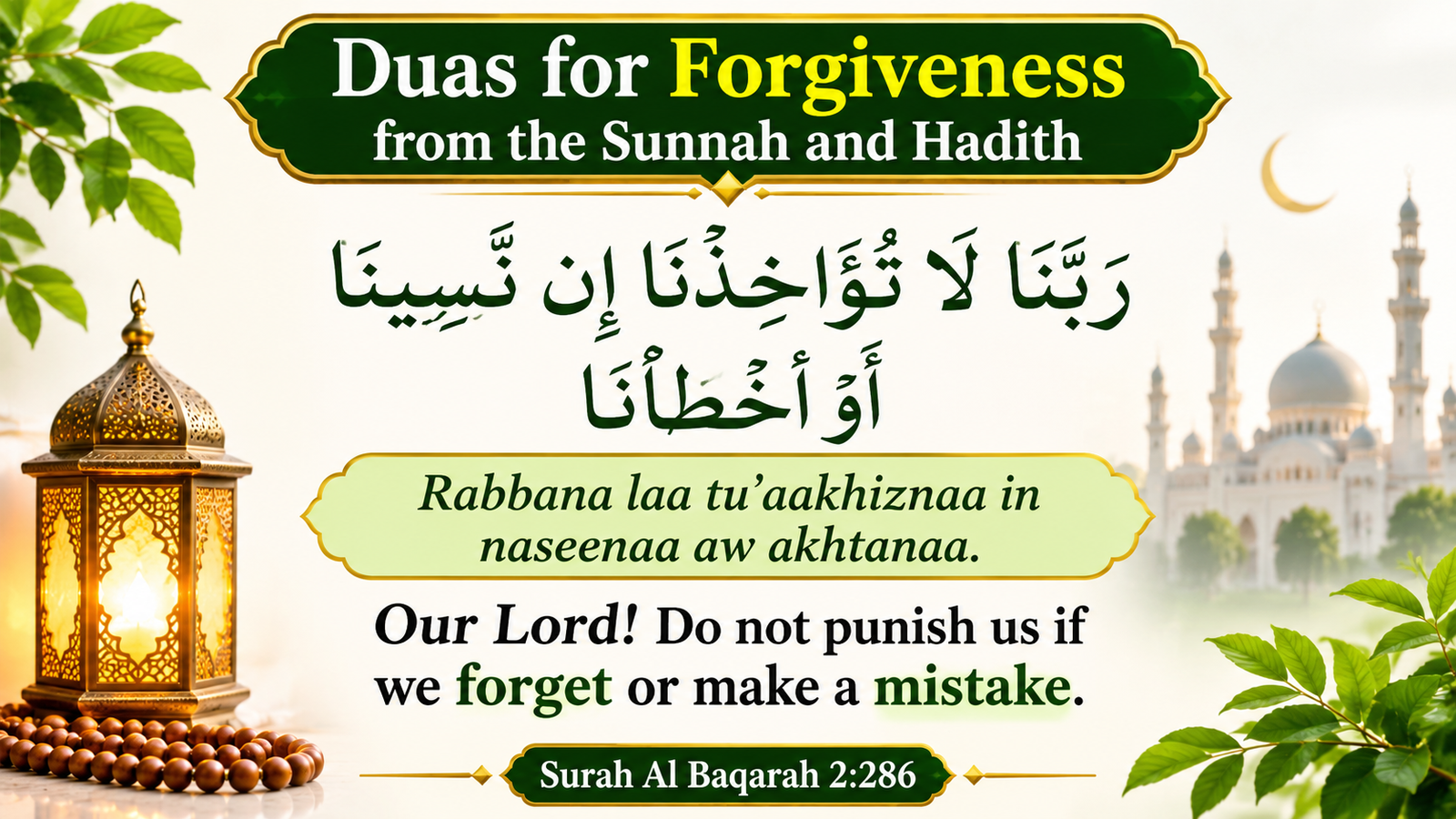
The final verse of Surah Al-Baqarah (2:286) contains one of the most comprehensive Islamic prayers for forgiveness in the entire Quran:
“Our Lord, do not impose blame upon us if we have forgotten or erred. Our Lord, lay not upon us a burden like that which You laid upon those before us. Our Lord, dua for forgiveness burden us not with that which we have no ability to bear. And pardon us, and forgive us, and have mercy upon us. You are our protector, so give us victory over the disbelieving people.”
What makes this dua exceptional is its acknowledgment of human limitation. It explicitly asks Allah to account for sin committed through forgetfulness or dua for success in life genuine error rather than deliberate defiance. Islamic scholars note this verse was revealed directly in response to the companions of the Prophet expressing anxiety about being held accountable even for passing thoughts. Allah’s response was one of profound mercy, and the verse has been recited at the end of Surah Al-Baqarah by Muslims every night for fourteen centuries since.
Dua from Surah Al-Imran for Repentance
Surah Al-Imran (3:16) records the supplication of the righteous: “Our Lord, indeed we have believed, so forgive us our sins and protect us from the punishment of the Fire.”
This three-part structure is worth memorizing as a template for Islamic repentance prayer:
- State your belief and your relationship to Allah
- Ask explicitly for forgiveness of your sins
- Ask for protection from the consequences of sin
Many scholars recommend this sequence when teaching new Muslims about the proper etiquette of supplication because it reflects the correct orientation of a believer approaching Allah. It is compact enough to use multiple times daily without it becoming mechanical.
Short Quranic Duas for Forgiveness You Can Memorize Today
Beyond the longer supplications, the Quran contains shorter duas for repentance that carry enormous weight precisely because of who uttered them first:
- Surah Al-Araf (7:23), the supplication of Adam and Eve: “Our Lord, we have wronged ourselves, and if You do not forgive us and have mercy upon us, we will surely be among the losers.”
- Surah Al-Anbiya (21:87), the supplication of Prophet Yunus from inside the whale: “There is no deity except You; exalted are You. Indeed, I have been of the wrongdoers.”
- Surah Nuh (71:28): “My Lord, forgive me and my parents and whoever enters my house a believer and the believing men and the believing women.”
These short Quranic duas for forgiveness serve as models of how prophets approached repentance: with total honesty about their wrongdoing, zero self-justification, dua for forgiveness and complete reliance on Allah’s mercy. That combination is exactly what Islamic scholars say makes a repentance sincere rather than merely verbal.
Duas for Forgiveness from the Sunnah and Hadith
One of the most grounding realizations in studying Islamic repentance is understanding that the Prophet Muhammad (peace be upon him) sought forgiveness constantly, even though he was already forgiven. That single fact reframes everything. Seeking pardon is not a sign of spiritual failure. It is a sign of closeness to Allah.
The Most Recited Prophetic Supplication for Forgiveness
The simplest and most frequently recommended Prophetic formula for seeking forgiveness is:
“Astaghfirullah” (I seek forgiveness from Allah).
This can be recited in multiples of three, ten, or one hundred. The Prophet (peace be upon him) recommended making istighfar at least one hundred times daily according to Sahih Muslim (Hadith 2702). Many scholars suggest making it a background practice during routine activities: walking to work, waiting, or winding down before sleep.
Additional Prophetic Duas for Seeking Allah’s Pardon
From Sahih Muslim (Hadith 2703), the Prophet (peace be upon him) taught:
“Allahumma ighfir li khatiatiy wa jahliy, wa israfiy fi amriy, wa ma anta a’alamu bihi minni. Allahumma ighfir li jiddiy wa hazliy, wa khatai wa amdiy, wa kullu dhalika indiy.”
Translation: “O Allah, forgive me my sins and my ignorance, my excesses in my affairs, and all that You know better than I about my faults. O Allah, forgive me my serious and trivial sins, my accidental and deliberate sins, and all of that is from me.”
The specificity here is instructive. This dua covers sins committed in seriousness and in jest, deliberately and accidentally, out of ignorance and out of willful transgression. When you recite it with awareness of what it covers, it becomes a thorough and honest accounting rather than a casual phrase.
Step-by-Step Guide to Performing Dua for Forgiveness
Knowing the words is only part of the practice. The conditions and manner in which you make dua for forgiveness determine its sincerity and, according to Islamic scholarship, its likelihood of acceptance.
Step 1: Ensure You Are in a State of Purity
Begin by making wudu (ablution) if possible. While dua does not require wudu the way Salah does, dua for forgiveness Islamic scholars from the four major schools of jurisprudence agree that ritual purity increases the receptivity of the heart and signals respect for the act of worship you are about to perform.
Step 2: Face the Qibla and Raise Your Hands
Face the direction of Mecca and raise your hands with palms upward, as modeled in numerous authenticated Hadiths. The Prophet (peace be upon him) described Allah as being “shy” to return the hands of His servant empty when they are raised in supplication, dua for forgiveness as recorded in Sunan Abu Dawud (Hadith 1488). This physical posture is a reminder that you are actively petitioning your Lord.
Step 3: Begin with Praise and Salawat
Open your dua with praise of Allah (such as “Alhamdulillah” and “SubhanAllah”) and send blessings upon the Prophet (peace be upon him). Imam al-Nawawi and other classical scholars specifically identified this as one of the etiquettes that makes dua more likely to be accepted. Beginning with a request without praising Allah first is compared in some traditions to beginning a letter without an address.
Step 4: Acknowledge Your Sin Honestly
This is the step most people rush or skip entirely. Before stating what you want from Allah, name your sin to yourself honestly. You do not need to list it aloud, dua for forgiveness but you need to hold it clearly in your mind and heart. Generic repentance without genuine awareness of what you are repenting from is thinner in its sincerity.
Step 5: Recite the Dua with Full Presence
Choose the supplication most relevant to your situation from the ones listed above. Recite it slowly and with understanding, in Arabic if you have memorized it, dua for forgiveness with the translation in mind if you have not yet. Scholars consistently emphasize that the heart must be engaged. Reciting a dua while mentally elsewhere is permissible but significantly weaker.
Step 6: Make a Genuine Intention Not to Return to the Sin
Tawbah, authentic Islamic repentance, requires four conditions according to classical scholars:
- Remorse for the sin committed
- Stopping the sinful action immediately
- Firm intention not to return to it
- Restitution to any person you have wronged, where applicable
If the sin only involved your relationship with Allah, dua for forgiveness the first three conditions are sufficient. If it involved a human being, you must also address that harm directly.
Step 7: Close with Confidence in Allah’s Mercy
End your dua by affirming your trust in Allah’s response. The Prophet (peace be upon him) said, “Call upon Allah while being certain of being answered,” as recorded in Sunan al-Tirmidhi (Hadith 3479). Closing with doubt undermines the entire supplication. Close instead with the conviction that Allah has heard you and that His mercy is greater than any sin you have committed.
Common Mistakes to Avoid When Asking for Forgiveness
Even sincere believers make errors in how they approach Islamic repentance prayer. These are the most common ones worth correcting.
- Reciting without understanding: Memorizing Arabic without knowing the meaning reduces the dua to mechanical sound. Pair every Arabic supplication with its translation until the meaning is automatic.
- Repenting without intention to change: Saying “forgive me” while planning to repeat the same sin immediately is not tawbah. It is a request for permission. Islamic scholars are unanimous on this point.
- Waiting for a “right moment”: The best time to make dua for forgiveness is now, in the last third of the night, after every Salah, and on Fridays. The worst time is when you postpone it indefinitely.
- Despairing of forgiveness for major sins: Surah Az-Zumar (39:53) is explicit. Allah forgives all sins for those who return to Him sincerely. Despair itself is considered a spiritual error in Islamic theology.
- Forgetting to address harm done to others: Duas for pardon between you and Allah do not automatically cover wrongs done to other people. Those require direct repair.
When and How Often Should You Make Dua for Forgiveness
The short answer is: daily, ideally multiple times. The Prophet (peace be upon him) made istighfar more than seventy times a day. Practically, this means:
- Morning and evening: Recite Sayyid al-Istighfar once in each period with full attention.
- After each Salah: Three repetitions of “Astaghfirullah” following the prescribed prayers is a Sunnah practice recorded in Sahih Muslim.
- During the last third of the night: Tahajjud time is considered among the most accepted periods for any dua, including forgiveness supplications.
- On Fridays: The hour before Maghrib on Friday is identified in multiple authentic Hadiths as a time when supplications are granted.
- During Ramadan and especially Laylat al-Qadr: These are peak seasons for seeking forgiveness, when reward and acceptance are multiplied.
Key Takeaways
- The dua for forgiveness is not a one-time reset. It is a daily spiritual discipline that builds taqwa and deepens your relationship with Allah over time.
- Sayyid al-Istighfar, recorded in Sahih al-Bukhari (Hadith 6306), is the most superior supplication for forgiveness according to the Prophet (peace be upon him) himself.
- Authentic tawbah requires remorse, stopping the sin, genuine intention not to return, and restitution where another person was harmed.
- Short Quranic duas from prophets like Adam, Yunus, dua for forgiveness and Nuh provide powerful models of sincere repentance that any believer can memorize and use daily.
- Despair of Allah’s mercy is itself a spiritual error. Surah Az-Zumar (39:53) explicitly states that Allah forgives all sins for those who return to Him.
Frequently Asked Questions
What is the best dua for forgiveness in Islam?
Sayyid al-Istighf
What is the powerful dua for forgiveness?
Sayyid al-Istighfar is the best dua for seeking forgiveness.
Which dhikr forgives all sins?
Saying Astaghfirullah sincerely and repenting to Allah.
What is the Arabic dua for forgiveness?
أَسْتَغْفِرُ اللَّهَ وَأَتُوبُ إِلَيْهِ
Is there a dua to forgive all major sins?
Yes, sincerely recite Astaghfirullah and make true Tawbah.
Will Allah forgive zina?
Yes, Allah forgives even major sins when a person sincerely repents.
What is the extremely powerful dua?
Sayyid al-Istighfar is one of the most powerful duas for forgiveness.






Leave a Reply