
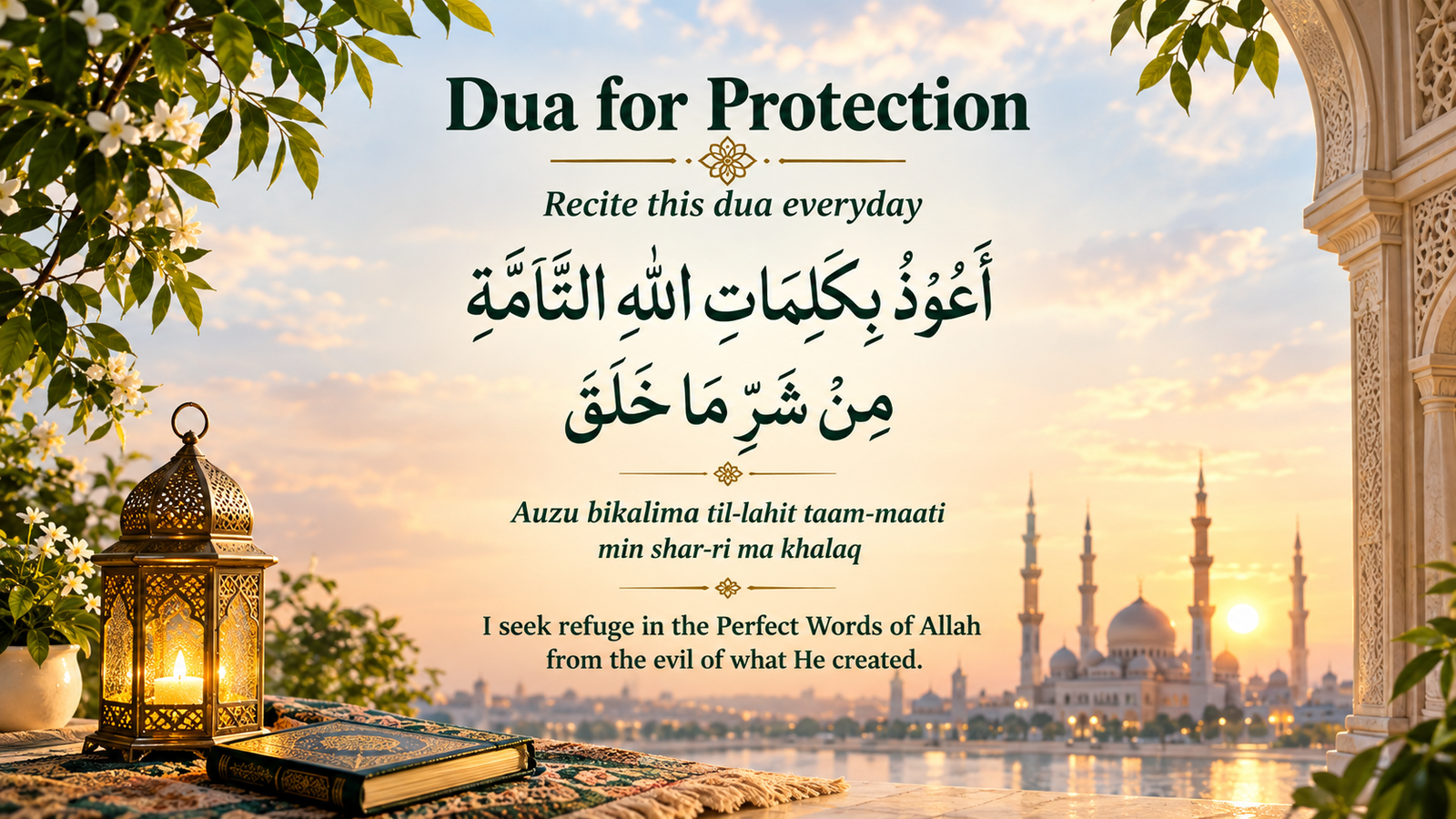
Dua for Protection from Everything: The Complete Islamic Guide to Divine Safety
Every Muslim faces moments of fear, uncertainty, or vulnerability. The dua for protection from everything is not a collection of passive words recited out of habit. It is one of the most powerful, theologically grounded practices in Islam, one that connects you directly to Allah and has been authenticated through centuries of rigorous scholarship.
This guide covers the most authoritative protective duas from the Quran and Sunnah, dua for protection from everything explains the spiritual mechanics behind them, and gives you a practical daily framework you can implement starting today.
What Is the Dua for Protection from Everything in Islam
The Arabic word “dua” (دعاء) literally means “calling out” or “invocation.” In Islamic theology, it represents the most direct channel of communication between a believer and Allah. The Prophet Muhammad (PBUH) described dua as “the essence of worship” (Tirmidhi, Hadith 3371), which positions supplication not as a last resort in moments of crisis, but as a continuous thread of reliance woven through every moment of daily life.
When scholars and ordinary Muslims speak about the dua for protection from everything, they are referring to a specific category of supplication called “dua al-isti’adha” (prayers of seeking refuge). These are prayers authenticated in the Quran and Sunnah that ask Allah to shield the believer from harm across every dimension of life: physical, spiritual, social, and psychological.
The Quran itself commands believers to make dua in Surah Ghafir (40:60): “And your Lord says, ‘Call upon Me; I will respond to you.'” This is not a suggestion. It is a divine guarantee, making supplication a theologically secured channel that no other practice fully replicates.
Why Scholars Treat Protective Dua as a Distinct Category
Imam Ibn al-Qayyim, in his foundational work “Al-Wabil al-Sayyib,” dedicates entire chapters to explaining how dua for safety and security functions as both an act of worship and a practical shield against harm. He distinguishes between duas that seek general closeness to Allah and duas that seek specific protection, noting that the latter carry unique blessings dua for protection from everything because they combine tawhid (affirming Allah’s sole power) with tawakkul (genuine reliance on Him).
The mistake most people make here is treating protective duas as purely ritual, something to recite quickly before moving on. In practice, the classical scholars taught that the sincerity, focus, and dua for protection from everything consistency with which you make dua directly affects its spiritual power.
The Spiritual Mechanics Behind Islamic Prayer for Protection
Understanding how dua for protection actually works in Islamic theology helps you engage with it more deeply and consistently.
Islamic scholars categorize protective duas under the concept of “tawakkul,” which means reliance on Allah. Importantly, tawakkul does not mean passivity. You take every practical measure available to you, then acknowledge that ultimate protection belongs to Allah alone. This is why the Prophet (PBUH) instructed Muslims to tie their camel before trusting in Allah, not instead of trusting in Allah.
That said, the spiritual dimension of protective prayer creates a real internal transformation. Consistent recitation of duas for safety produces what scholars describe as “itmi’nan,” a tranquility of the heart explicitly promised in Surah Ar-Ra’d (13:28): “Verily, in the remembrance of Allah do hearts find rest.” This is not metaphorical comfort. Islamic scholarship treats it as a spiritually active state that changes how you process fear and uncertainty.
A 2020 study published in the Journal of Religion and Health found that regular religious supplication practices were associated with significantly reduced anxiety levels and improved emotional regulation among Muslim participants. This supports what Islamic scholars have taught for over a millennium: that prayer for divine protection produces measurable benefits for both spiritual and psychological wellbeing.
Three Core Spiritual Benefits of Seeking Divine Protection
When you engage seriously with dua for protection from all evil, you gain benefits across three interconnected dimensions.
- Reinforcement of tawhid. Every protective dua affirms that only Allah has ultimate power over harm and benefit. Each recitation is an act of monotheism, not just ritual.
- Continuous dhikr. Remembrance of Allah is itself a form of protection. Surah Ar-Ra’d (13:28) connects dhikr directly to spiritual safety and inner peace.
- Active engagement with qadar. The Prophet (PBUH) taught in Tirmidhi that dua can interact with divine decree in certain circumstances. This makes supplication spiritually active, not merely symbolic.
The Most Powerful Dua for Protection from Everything
Now here is what you actually need to know: which specific prayers Islamic scholarship identifies as the most comprehensive and dua for protection from everything authenticated shields of divine protection.
Ayatul Kursi: The Greatest Verse of Protection
Ayatul Kursi (Surah Al-Baqarah, 2:255) holds the title of the greatest verse in the Quran, confirmed by the Prophet Muhammad (PBUH) in an authentic narration by Ubayy ibn Ka’b in Sahih Muslim. No single verse packs more theological weight into its protection.
The verse begins: “Allah, there is no deity except Him, the Ever-Living, the Sustainer of existence. Neither drowsiness overtakes Him nor sleep. To Him belongs whatever is in the heavens and whatever is on the earth…”
What makes Ayatul Kursi the most powerful dua for protection from everything is its comprehensive theological scope. It affirms Allah’s absolute sovereignty, His eternal existence, and His complete knowledge simultaneously. According to Sahih Bukhari (Hadith 5010), the Prophet (PBUH) told Abu Hurairah that whoever recites Ayatul Kursi every night before sleeping will have a guardian from Allah protecting him until morning, and dua for protection from everything no shaytan will approach him.
When to recite Ayatul Kursi for maximum benefit, based on authenticated hadith:
- After every obligatory (fard) prayer
- Before sleeping each night
- Upon leaving your home
- During moments of fear or spiritual unease
These are not general recommendations. Each timing is specifically authenticated in Sahih Bukhari, Sahih Muslim, or Sunan Abu Dawud.
Surah Al-Falaq: Seeking Refuge from External Harm
Surah Al-Falaq (Chapter 113) is one of the two chapters known collectively as “Al-Mu’awwidhatayn,” the paired chapters of seeking refuge. This five-verse surah is remarkably specific. It provides explicit protection from four distinct categories of harm:
- The evil of everything Allah has created
- The evil of darkness when it settles
- The evil of those who blow on knots (a reference to harmful magic)
- The evil of an envier when he envies
This specificity matters. Al-Falaq covers both natural and supernatural sources of harm, making it irreplaceable in any daily protection routine. The Prophet (PBUH) recited it as part of his morning and evening adhkar and used it as a core element of ruqyah (spiritual healing), as documented in Sunan Abu Dawud and major hadith collections.
Surah An-Nas: Protection from Internal Spiritual Harm
Surah An-Nas (Chapter 114) pairs with Al-Falaq to complete your spiritual coverage. While Al-Falaq focuses on external threats, An-Nas targets the internal dimension: the whisperings of Shaytan and dua for protection from everything the subtle corruption of the soul.
The surah invokes Allah using three of His attributes in direct succession: Rabb (Lord), Malik (King), and Ilah (God) of mankind. Islamic scholars explain that dua for protection from everything this triple invocation is not accidental. It secures protection across the three planes of human existence: the physical, the social, and the spiritual.
The Three Quls: The Most Accessible Complete Protection
The “Three Quls” refers to Surah Al-Ikhlas (112), Surah Al-Falaq (113), and Surah An-Nas (114) recited together. The Prophet Muhammad (PBUH) taught that reciting each of these three surahs three times in the morning and three times in the evening is sufficient protection for everything (Sunan Abu Dawud, Hadith 5082).
Here is the thing: this is the most accessible complete dua for protection from enemies and all forms of harm available to any Muslim, regardless of their level of scholarly knowledge. Surah Al-Ikhlas grounds you in tawhid. Al-Falaq shields you from external evil. An-Nas guards your inner life. Together, they form a complete protective circuit.
The practical method authenticated in the Sunnah is to recite each surah three times, then blow lightly over your hands, and wipe them over your body. This is how the Prophet (PBUH) performed this protective practice himself, as narrated in Sahih Bukhari.
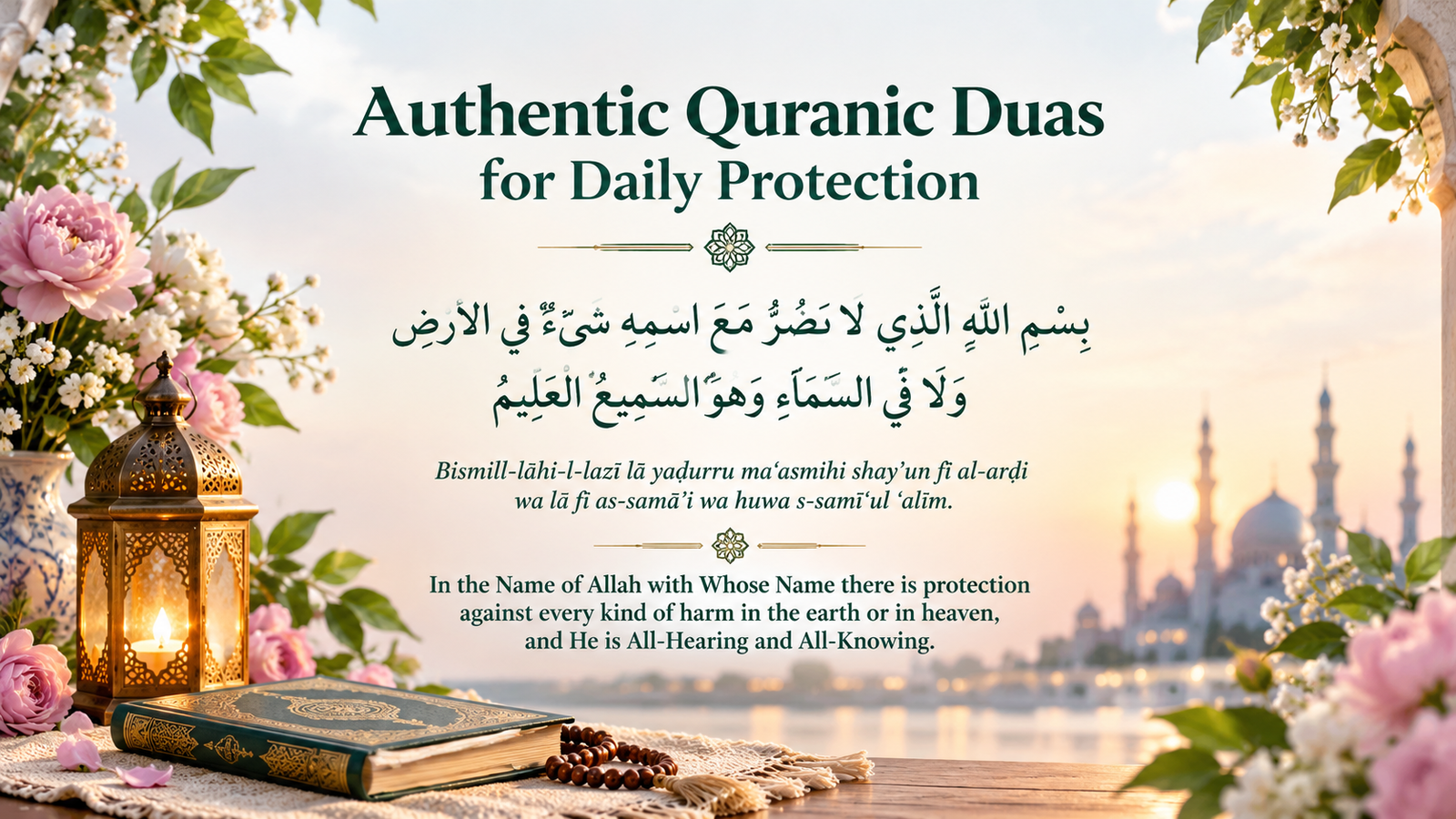
Authentic Quranic Duas for Daily Protection
Beyond the Three Quls and Ayatul Kursi, the Quran contains additional verses that scholars have specifically identified as providing broad divine protection.
The Last Two Verses of Surah Al-Baqarah
The final two verses of Surah Al-Baqarah (2:285-286), known as “Amana Rasul,” hold a special status in Islamic protection practice. The Prophet (PBUH) stated in an authenticated hadith in Sahih Bukhari that whoever recites these two verses at night, dua for protection from everything they will be sufficient for him. Islamic scholars interpret “sufficient” to mean they provide comprehensive protection through the night.
These verses affirm belief in Allah, His angels, His books, and His messengers, then conclude with the famous supplication: “Allah does not burden a soul beyond that it can bear…” This is not only a statement of theology but an active dua for protection from unbearable hardship.
Surah Al-Baqarah as a Complete Protective Presence
The Prophet (PBUH) stated that Shaytan flees from any house in which Surah Al-Baqarah is recited (Sahih Muslim). This makes regular recitation of the chapter, whether in full or in significant portions, one of the most powerful long-form Islamic prayers for protection a Muslim can practice in their home environment.
In practice, Dua for Barakah many scholars recommend completing Surah Al-Baqarah in the home at minimum once every three days to maintain this protective presence. This is not superstition. It is an authenticated Sunnah with a documented spiritual mechanism.
Dua for Protection from Everything: Prophetic Supplications from the Sunnah
The Quran is the primary source of Islamic protective prayer, but the Prophet (PBUH) also taught specific supplications that address nearly every situation a Muslim might face.
Morning and Evening Adhkar for Complete Protection
The morning and evening adhkar (remembrances) form a structured daily framework for maintaining protective supplication. Key among these is the following dua, authenticated in Sunan Abu Dawud (Hadith 5088):
“Bismillahil-ladhi la yadurru ma’asmihi shay’un fil-ardi wa la fis-sama’i wa Huwas-Sami’ul-‘Alim.”
Translation: “In the name of Allah, dua for protection from everything with Whose name nothing on earth or in heaven can cause harm, and He is the All-Hearing, the All-Knowing.”
The Prophet (PBUH) stated that whoever recites this three times in the morning and three times in the evening will not be harmed by anything. This is one of the most direct prophetic guarantees of protection in the entire Sunnah.
Dua for Protection When Leaving the Home
Every time you step outside, there is an authenticated supplication for seeking divine safety:
“Bismillah, tawakkaltu ‘alallah, wa la hawla wa la quwwata illa billah.”
Translation: “In the name of Allah, I place my trust in Allah, and dua for protection from everything there is no power or strength except with Allah.”
This dua, authenticated in Sunan Abu Dawud and Tirmidhi, dua for protection from everything is reported to result in an angel telling Shaytan: “You have no authority over this person.” It is one of the shortest and most powerful dua for protection from evil that you can memorize in under a minute.
Dua for Protection from Harm During Sleep
Sleep represents a state of vulnerability, which is why the Prophet (PBUH) emphasized specific protective duas before resting. Beyond Ayatul Kursi, the following supplication is authenticated in Sahih Bukhari:
“Allahumma bismika amutu wa ahya.”
Translation: “O Allah, in Your name I die and I live.”
Paired with Ayatul Kursi and the Three Quls, this creates a complete bedtime protection routine authenticated entirely in Sahih hadith collections.
How to Build a Daily Dua Routine for Complete Protection
Knowing individual duas is valuable. Practicing them consistently in a structured routine is what actually transforms your spiritual life.
Here is a practical daily framework based entirely on authenticated hadith:
- Upon waking: Recite “Alhamdulillahil-ladhi ahyana ba’da ma amatana wa ilayhin-nushur” (Sahih Bukhari). Follow with the morning adhkar including the Three Quls three times each.
- After Fajr prayer: Recite Ayatul Kursi, then the last two verses of Surah Al-Baqarah.
- When leaving home: Recite the home-leaving dua (Bismillah, tawakkaltu ‘alallah…).
- Morning and afternoon: Recite the Bismillahil-ladhi dua three times each session.
- After Maghrib prayer: Begin the evening adhkar, repeating the Three Quls three times each.
- Before sleep: Recite Ayatul Kursi, the Three Quls (blowing over hands and wiping the body), and the sleep dua.
This routine requires approximately 10 to 15 minutes across the full day. In practice, most Muslims find that within two to three weeks of consistent practice, the protective duas become internalized, and the sense of spiritual security they produce becomes a stable part of daily life.
Common Misconceptions About Dua for Protection
The most common misconception is that recitation alone, without understanding or sincerity, guarantees protection. Classical scholars including Ibn Taymiyyah and Ibn al-Qayyim are clear on this point: the conditions of dua (including sincerity, dua for protection from everything full attention, and avoiding prohibited actions) affect its acceptance.
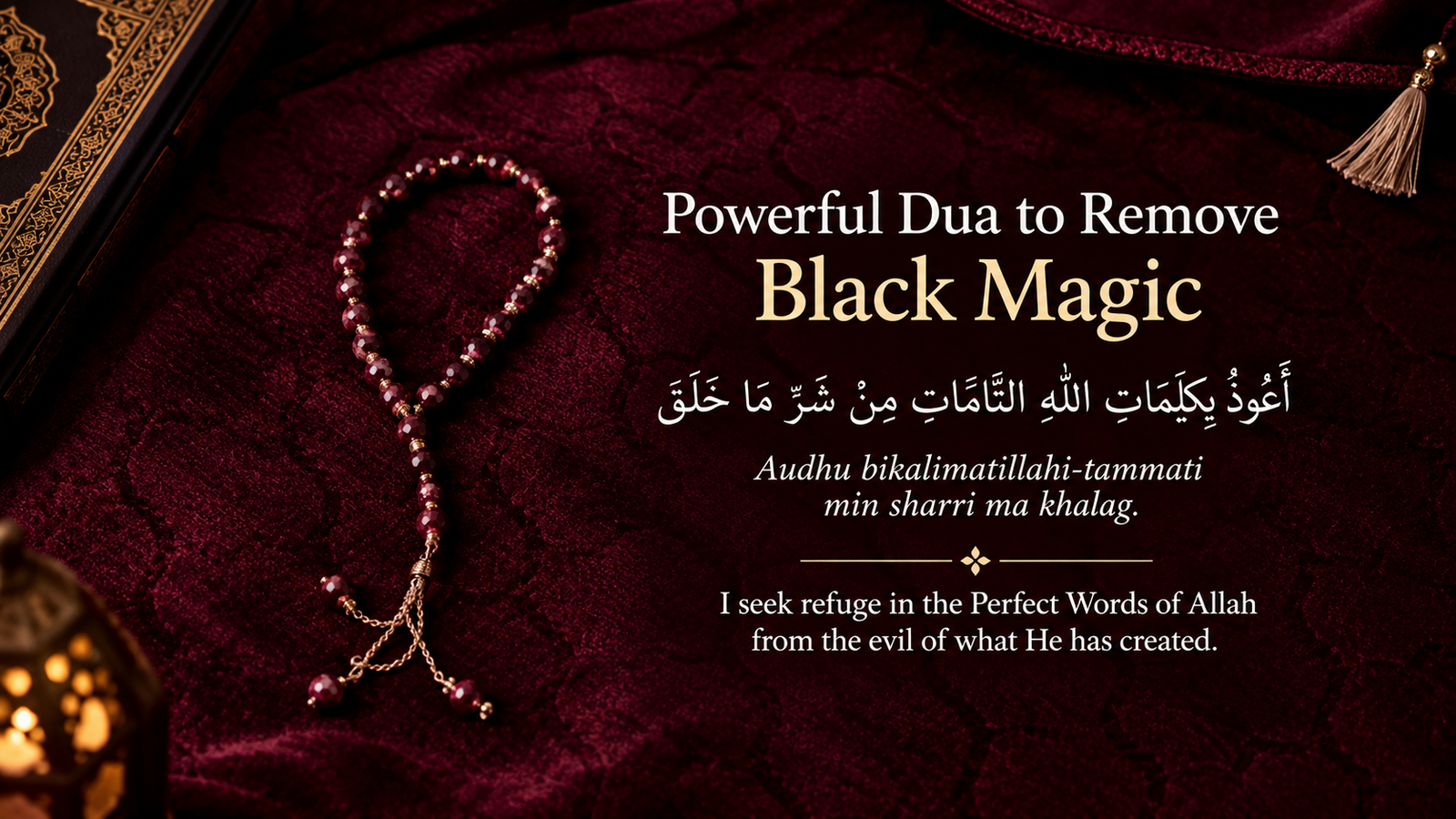
A second misconception is that dua for protection from black magic or the evil eye replaces practical caution. Islamic theology is explicit that tawakkul includes taking practical precautions. Dua and practical wisdom work together, not in opposition.
A third misconception is that only scholars or highly religious Muslims benefit from protective duas. The authenticated hadith record the Prophet (PBUH) teaching these duas to ordinary companions without conditions attached to their level of knowledge. The duas themselves are accessible to every Muslim.
Key Takeaways
- The dua for protection from everything draws from two primary sources: authenticated Quranic verses and dua for protection from everything Prophetic supplications from Sahih hadith collections.
- Ayatul Kursi, the Three Quls, and the last two verses of Surah Al-Baqarah form the core of Islamic prayer for comprehensive protection.
- Protective dua functions through both spiritual and psychological mechanisms, with research in the Journal of Religion and Health (2020) supporting its measurable wellbeing benefits.
- A consistent daily routine of morning and evening adhkar, structured around authenticated timings, dua for protection from everything is the most effective way to maintain continuous divine protection.
- Sincerity, focus, and avoiding what is prohibited are conditions that affect the spiritual weight of any dua for safety and security.
Frequently Asked Questions
What is the single most powerful dua for protection from everything in Islam?
Ayatul Kursi (Surah Al-Baqarah, 2:255) is confirmed by the Prophet (PBUH) in Sahih Muslim as the greatest verse in the Quran and the most powerful single supplication for divine protection. However, Islamic scholars recommend combining it with the Three Quls (Surahs 112, 113, and 114) for comprehensive coverage of both external and dua for protection from everything internal sources of harm. Together, these four recitations form what the Sunnah describes as sufficient protection across all dimensions of a believer’s life.
How many times should I recite protective duas each day for them to be effective?
The authenticated Sunnah specifies three times each for the morning adhkar duas and three times each for the evening adhkar duas. Ayatul Kursi should be recited after every obligatory prayer and before sleeping. The Prophet (PBUH) stated in Sunan Abu Dawud (Hadith 5082) that reciting the Three Quls three times in the morning and evening is “sufficient protection for everything,” which gives you a clear, hadith-based framework to follow without guesswork.
Can dua for protection help against the evil eye and black magic specifically?
Yes.
What is the best dua for protection from everything?
One of the duas for protection is to ask Allah for help from all kinds of danger bad things, worries and dua for protection from everything problems. You can say prayers that are mentioned in the Quran and the teachings of the Prophet for help from Allah and guidance.
Which surah should I read for protection from evil?
Surah Al-Falaq and Surah An-Nas are very good to read when you want help from Allah against evil, envy, dua for protection from everything thoughts and harmful things.
How times should I recite the dua for protection?
You can say the morning and dua for protection from everything evening prayers every day. Some prayers from the teachings of the Prophet are said three times in the morning and three times in the evening while others have numbers.
Can I read a dua for protection before sleeping?
Yes you can say Ayat al-Kursi, Surah Al-Ikhlas, Surah Al-Falaq and Surah An-Nas before you go to sleep, as part of your habits.



Leave a Reply