
Dua for Protection from Evil: The Complete Islamic Guide to Reciting Them Daily
Few Muslims realise that the Prophet Muhammad (peace be upon him) prescribed a specific, structured daily routine for spiritual protection, one that scholars have practiced for over 1,400 years. If you are looking for the most authentic and powerful dua for protection from evil, you are in the right place. This guide covers every major protective supplication in Islam, explains exactly when and how to recite each one, and draws on classical scholarship to give you the full picture.
What Is a Dua for Protection from Evil
The Arabic word “dua” comes from the root meaning “to call” or “to invite.” In Islamic practice, dua refers to personal supplication directed to Allah, and the Prophet Muhammad (peace be upon him) described it as the very essence of worship, as recorded in Sunan Abu Dawood (Hadith 1479). A dua for protection from evil is a specific category of supplication in which a believer asks Allah to guard them against harm, whether visible or invisible.
That harm includes enemies, spiritual adversaries, the evil eye, jinn, and the whispering of Shaytan. These duas are not ceremonial formulas. They are deliberate acts of acknowledgment that ultimate power belongs to Allah alone, and that a believer’s first and most effective line of defence is sincere supplication backed by consistent practice.
Think of it this way. Your physical body requires daily nutrition to function and resist illness. Your soul operates the same way. Just as you would not skip meals for weeks and expect to stay healthy, you cannot expect spiritual protection without consistent engagement with the words Allah has prescribed. The Quran itself confirms this logic, describing its verses as “a healing for what is in the breasts” (Surah Yunus, 10:57).
Why Seeking Protection from Evil Is Central to Islamic Practice
Islam does not ask you to pretend evil does not exist. The Quran openly acknowledges the reality of Shaytan, black magic, dua for protection from evil envy, and spiritual adversaries. What Islam teaches is not passive fear but active strategy: complete reliance on Allah combined with the specific words and actions He has prescribed through revelation and prophetic example.
The Scholarly Foundation Behind Protective Duas
Ibn Qayyim al-Jawziyyah (1292 to 1350 CE), one of the most systematically rigorous scholars in Islamic history, devoted entire chapters of his monumental work “Zad al-Ma’ad” (Provisions of the Hereafter) to the mechanics of spiritual protection. He described the Muawwidhatayn, dua for protection from evil Surah Al Falaq and Surah An Nas, as the most comprehensive protection available to any human being, arguing that no two chapters of the Quran offer greater refuge from evil.
This is not a matter of folk belief or regional tradition. It reflects a sophisticated, textually grounded understanding of how spiritual harm operates and how divine speech disrupts it. Ibn Taymiyyah (1263 to 1328 CE) echoed this view, dua for protection from evil writing that the words of the Quran carry an active spiritual force that repels harm the way light repels darkness.
The Design Behind Daily Protective Recitation
The integration of protective duas into daily Muslim life is deliberate, not accidental. The Sunnah of the Prophet (peace be upon him) includes specific supplications for morning and evening, for entering and leaving the home, for sleeping, for entering the bathroom, dua for protection from evil and for dozens of other daily moments. According to a hadith in Sahih Muslim (Hadith 2709), the Prophet recited specific protective words each morning and evening and encouraged his companions to do the same.
Scholars call this consistent practice a “fortress of dhikr,” a continuous shield maintained through daily repetition. What this means for you practically is that protection in Islam is not a one-time event. It is a lifestyle built on recurring habit.
The Most Powerful Duas for Protection from Evil
The following supplications represent the core protective toolkit of Islamic tradition. Each one comes with direct prophetic authority, classical scholarly commentary, dua for protection from evil and practical guidance on when and how to use it.
Ayat al-Kursi: The Greatest Verse for Protection
Ayat al-Kursi is verse 255 of Surah Al Baqarah, dua for protection from evil and it holds the distinction of being the single greatest verse in the entire Quran, confirmed by the Prophet Muhammad (peace be upon him) himself in Sahih Muslim (Hadith 810). The verse reads:
“Allah, there is no deity except Him, dua for protection from evil the Ever-Living, the Sustainer of existence. Neither drowsiness overtakes Him nor sleep. To Him belongs whatever is in the heavens and whatever is on the earth…”
The prophetic hadith recorded in Sahih Bukhari (Hadith 5010) is direct and unambiguous: whoever recites Ayat al-Kursi before sleeping will be guarded by an angel until morning, and Shaytan will not be able to approach them. This is not metaphorical. It is a specific, dua for protection from evil traceable promise backed by the highest level of prophetic authenticity.
In practice, Ayat al-Kursi functions as the cornerstone of any dua for protection from evil routine. Recite it:
- After every obligatory (fard) prayer
- Before sleeping
- When entering your home
- When feeling anxious or spiritually unsettled
The cumulative effect of reciting it consistently across these moments creates a continuous spiritual barrier throughout your day. Scholars across all four major schools of Islamic thought, Hanafi, Maliki, dua for protection from evil Shafi’i, and Hanbali, are unanimous in emphasising its centrality to protective practice.
Surah Al Falaq: Seeking Refuge from Specific Sources of Harm
Surah Al Falaq (Chapter 113) is the first of the two chapters known collectively as the Muawwidhatayn, meaning “the two seeking refuge.” What makes this surah extraordinary as a protective dua is its specificity. It does not offer vague, dua for protection from evil general protection. It names distinct categories of evil and asks Allah for refuge from each one individually:
- The evil of what He has created (all created harm)
- The evil of darkness when it settles (night, obscurity, concealment)
- The evil of those who blow on knots (a Quranic reference to magic and sorcery)
- The evil of the envier when they envy (the evil eye)
The Prophet Muhammad (peace be upon him) recited Surah Al Falaq, Surah An Nas, and Surah Al Ikhlas each morning and each evening, three times each, then blew over his hands and wiped his body (Sahih Bukhari, Hadith 5017). This practice, maintained consistently, dua for protection from evil covers the most commonly encountered forms of spiritual harm that a believer faces.
Here is the thing most people overlook: the precision of this surah is itself a signal. Allah did not give vague reassurance. He gave a structured, targeted supplication that addresses the exact mechanisms through which harm enters a person’s life. That level of specificity should inspire confidence, not rote recitation.
Surah An Nas: Protection from the Whispering of Shaytan
Surah An Nas (Chapter 114) completes the Muawwidhatayn and targets the most subtle and dangerous form of evil: the internal whisper of Shaytan. This surah addresses what scholars call “waswas,” the persistent doubts, temptations, and corrosive thoughts that Shaytan plants in the human heart.
The surah calls on three of Allah’s attributes simultaneously, dua for protection from evil His lordship, His kingship, and His divinity, to create a comprehensive shield against this interior attack. Ibn Taymiyyah wrote that waswas is more dangerous than outward harm precisely because it corrupts intention and faith from within, dua for protection from evil turning a person against their own spiritual welfare without their even realising it.
Reciting Surah An Nas as a dua for protection from evil is most effective when you:
- Feel spiritually scattered or distracted during prayer
- Struggle with persistent negative or sinful thoughts
- Experience doubt about matters of faith
- Feel an unexplained sense of heaviness or spiritual withdrawal
Recite Surah An Nas along with Surah Al Falaq and Surah Al Ikhlas as a unit, following the prophetic method of three repetitions in the morning and three in the evening.
The Prophetic Dua for Morning and Evening Protection
Beyond Quranic chapters, dua for protection from evil the Prophet Muhammad (peace be upon him) taught specific supplications designed to protect believers throughout their daily lives. One of the most widely authenticated is:
Arabic: “Bismillahilladhi la yadurru ma’asmihi shay’un fil ardi wa la fis-sama’i wa huwas-sami’ul ‘aleem.”
Translation: “In the name of Allah, with whose name nothing on earth or in the sky can cause harm, and He is the All-Hearing, the All-Knowing.”
According to hadith recorded in both Sunan Abu Dawood (Hadith 5088) and Sunan al-Tirmidhi (Hadith 3388), whoever recites this supplication three times in the morning and three times in the evening will not be harmed by anything that day or night. This is among the most practically actionable duas for daily protection from harm in the entire prophetic tradition.
A second essential morning and evening dua is:
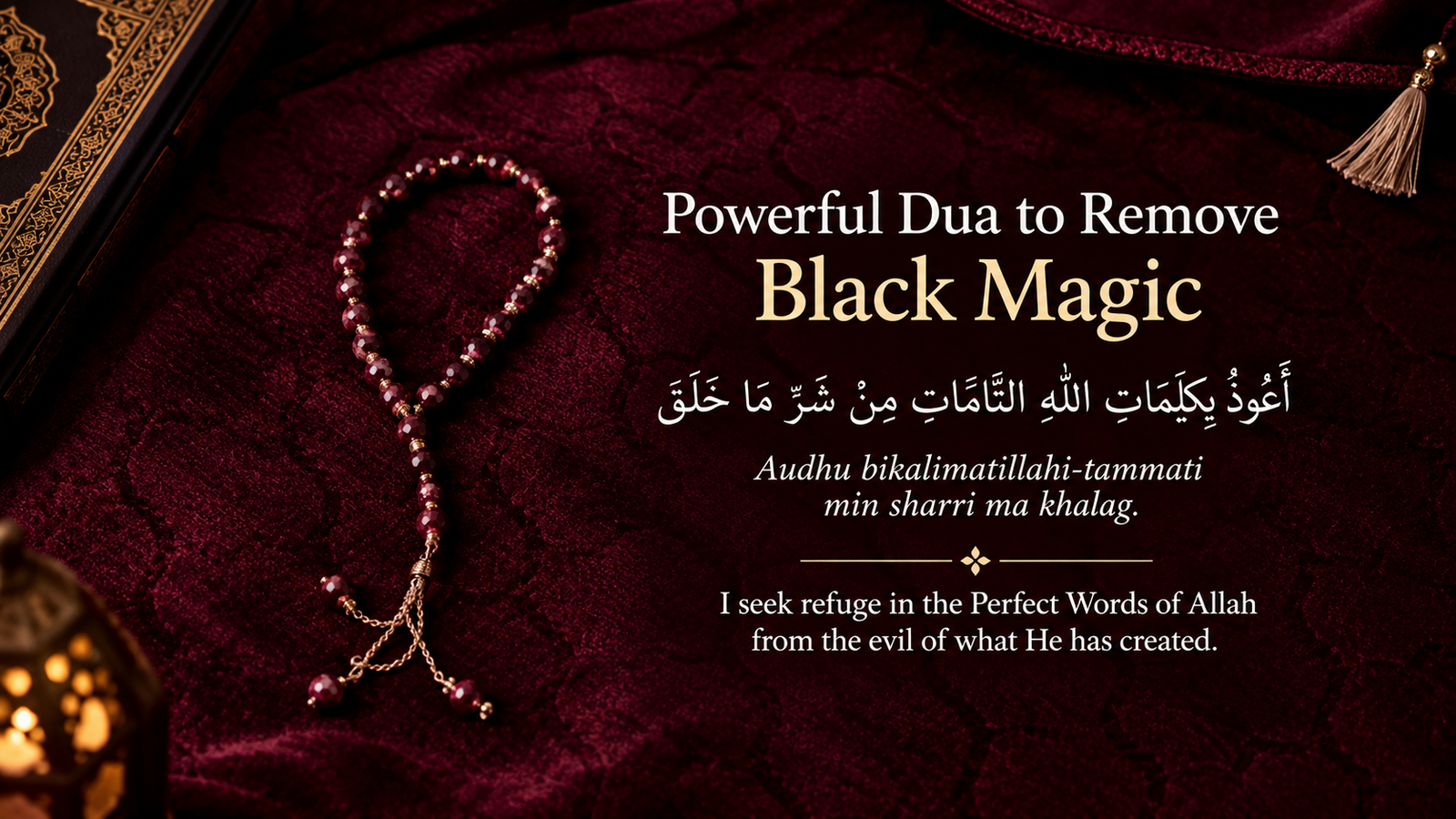
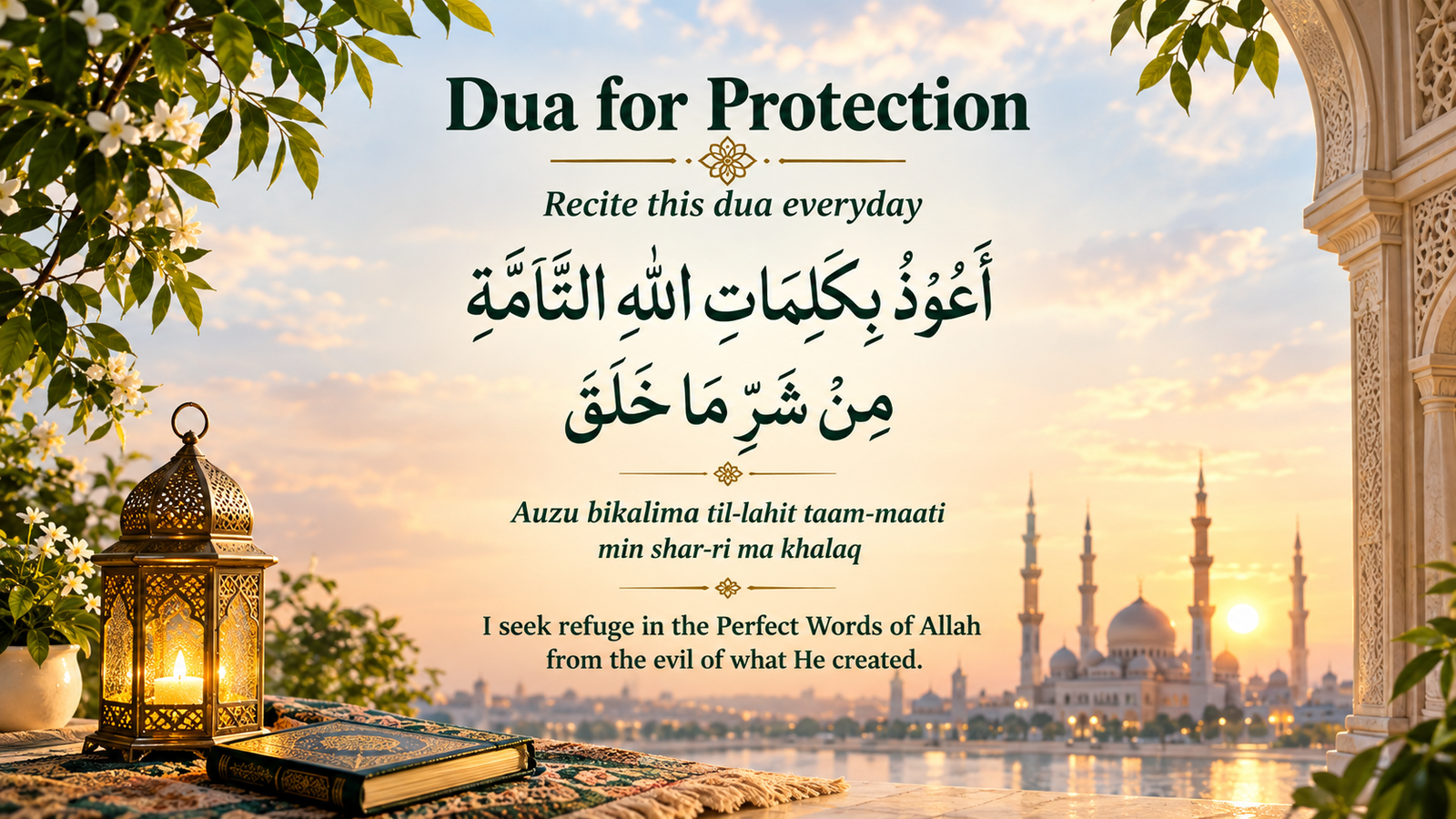
Arabic: “A’udhu bikalimatillahit-tammati min sharri ma khalaq.”
Translation: “I seek refuge in the perfect words of Allah from the evil of what He has created.”
This dua, recorded in Sahih Muslim (Hadith 2708), was specifically recommended by the Prophet as protection when stopping at any place, whether on a journey or at home.
How to Build a Daily Dua Routine for Protection from Evil
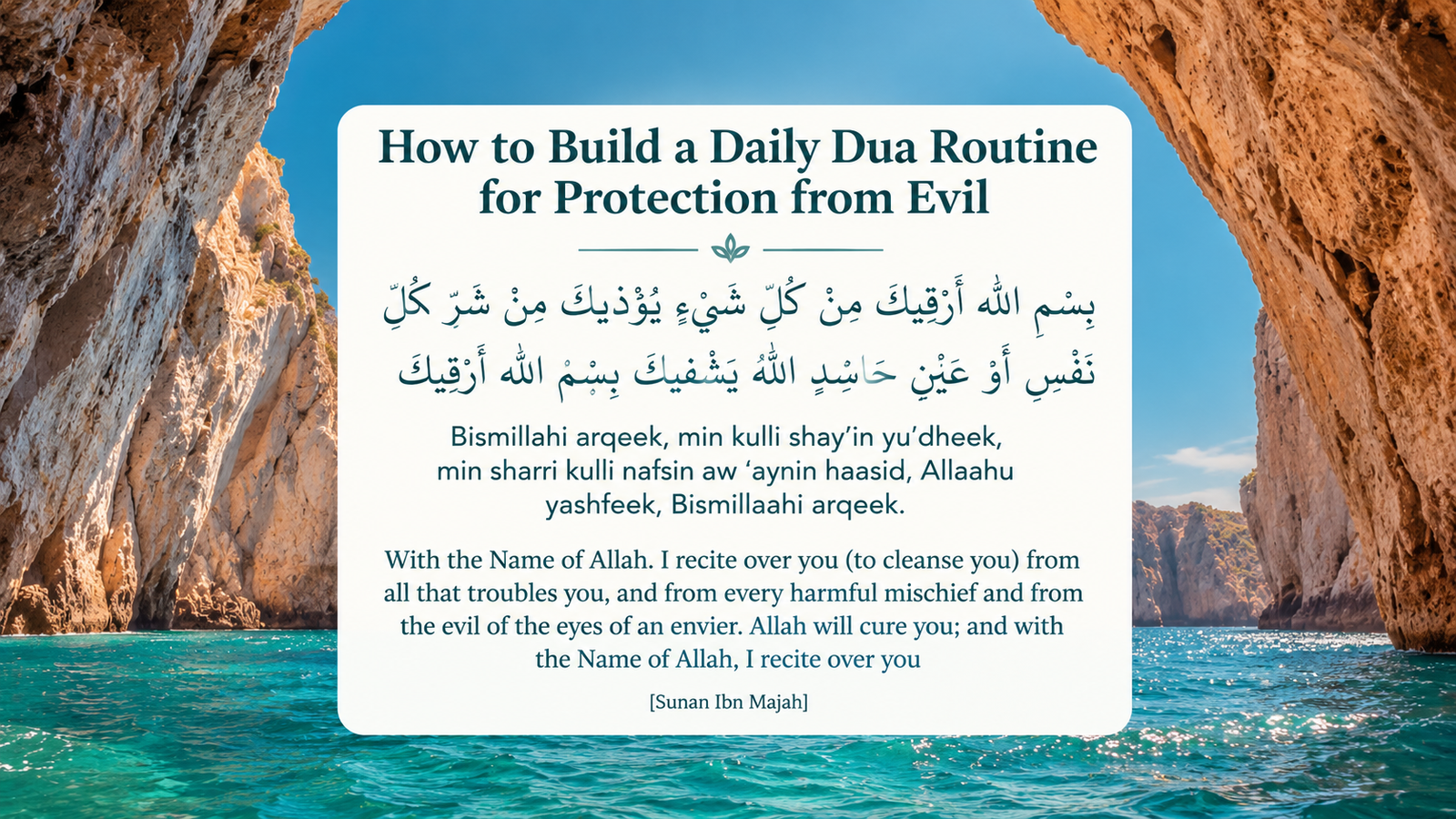
Building a consistent protective practice is not complicated, dua for protection from evil but it does require structure. The mistake most people make is reciting protective duas reactively, only when something goes wrong, rather than proactively, as a daily shield. Here is a practical routine built entirely on authenticated prophetic practice.
Morning Adhkar Routine After Fajr Prayer
After completing Fajr prayer, follow this sequence:
- Recite Ayat al-Kursi once.
- Recite Surah Al Ikhlas, Surah Al Falaq, and Surah An Nas three times each, then blow over your hands and wipe your face and body.
- Recite “Bismillahilladhi la yadurru ma’asmihi…” three times.
- Recite “A’udhu bikalimatillahit-tammati min sharri ma khalaq” three times.
This entire sequence takes approximately five to seven minutes. That is a small investment for a protection that the Prophet promised would last until evening.
Evening Adhkar Routine After Asr Prayer
The evening adhkar mirrors the morning routine and should be performed after Asr prayer or before Maghrib:
- Recite Ayat al-Kursi once.
- Recite Surah Al Ikhlas, Surah Al Falaq, and Surah An Nas three times each with the blowing method.
- Recite the prophetic dua “Bismillahilladhi la yadurru…” three times.
- Add “Allahumma inni as’aluka al-‘afwa wal-‘afiyah” (O Allah, I ask You for pardon and well-being), recorded in Sunan Abu Dawood (Hadith 5074).
Dua for Protection Before Sleeping
The bedtime dua for protection from evil is particularly important because sleep is a state of vulnerability. The authenticated routine for before sleep includes:
- Recite Ayat al-Kursi.
- Recite the last two verses of Surah Al Baqarah (2:285-286), which the Prophet described as sufficient for whoever recites them at night (Sahih Bukhari, Hadith 5009).
- Recite “Bismika Allahumma amutu wa ahya” (In Your name, O Allah, I die and I live), recorded in Sahih Bukhari (Hadith 6324).
Common Mistakes to Avoid When Reciting Protective Duas
Even sincere Muslims sometimes undermine the effectiveness of their protective practice without realising it. The following are the most frequent errors, and how to correct them.
Reciting Without Understanding or Presence of Heart
Reciting a dua for protection from evil at high speed, without understanding its meaning, significantly reduces its spiritual effect. Scholars including Ibn al-Qayyim consistently emphasised that the heart must be present and engaged during supplication. If you do not understand Arabic, spend one week memorising the translation of each dua alongside its Arabic text.
Treating Duas as One-Time Solutions
Protective duas are not a single cure for a specific problem. They are a daily maintenance system. Reciting them once during a crisis and then abandoning the practice is like taking one vitamin tablet and expecting lifelong health. Consistency is what builds the “fortress of dhikr” scholars describe.
Neglecting the Conditions of Answered Dua
Islamic scholars identify several conditions that strengthen the acceptance of any dua, including:
- Performing wudu (ritual purification) before supplication
- Facing the qiblah where possible
- Beginning with praise of Allah and salawat on the Prophet
- Maintaining halal (permissible) livelihood and conduct
- Avoiding sin that could create a barrier between you and Allah’s response
Key Takeaways
- A dua for protection from evil is not a passive ritual but an active, daily spiritual practice rooted in over 1,400 years of Islamic scholarship and prophetic guidance.
- The three most powerful protective tools are Ayat al-Kursi, Surah Al Falaq, and Surah An Nas, each backed by the highest levels of hadith authenticity.
- The prophetic morning and evening adhkar routine creates a continuous spiritual shield when practiced consistently after Fajr and Asr prayers.
- Understanding the meaning of each dua activates the presence of heart that scholars identify as essential to effective supplication.
- Protection in Islam is a lifestyle, not an event. Consistency, correct practice, and maintaining the conditions of answered dua all amplify the effect.
Frequently Asked Questions
Which dua for protection from evil is the most powerful?
Ayat al-Kursi (Surah Al Baqarah, 2:255) is authenticated by the Prophet Muhammad (peace be upon him) as the greatest verse in the Quran and the single most powerful protective supplication available to a believer. Paired with the Muawwidhatayn (Surah Al Falaq and Surah An Nas), it forms the most comprehensive dua for protection from evil in the Islamic tradition. Recite all three together morning, evening, and before sleep for maximum coverage.
How many times should I recite protective duas?
The prophetic method for the core protective chapters (Surah Al Ikhlas, Surah Al Falaq, and Surah An Nas) is three times each in the morning and three times each in the evening, followed by blowing over the hands and wiping the body. Ayat al-Kursi is typically recited once after each obligatory prayer and once before sleep. The key variable is not volume of repetition but consistency across days and weeks.
Can protective duas remove black magic or the evil eye?
According to classical Islamic scholarship, including the detailed analysis found in Ibn al-Qayyim’s “Zad al-Ma’ad,” consistent recitation of Quranic protective verses and authentic prophetic duas can both prevent and help address the effects of black magic (sihr) and the evil eye (ayn). These duas work as both a shield and a healing mechanism. That said, severe cases of spiritual affliction should also involve seeking guidance from a qualified Islamic scholar alongside consistent personal practice.




Leave a Reply