
Dua for Sabr and Strength: How to Ask Allah for Patience and Resilience
Life does not warn you before it breaks you. One moment you are managing, and the next you are sitting in silence, wondering how to carry what has been placed on you. If you have ever searched for a dua for sabr and strength because you had nowhere else to turn, this guide was written for you. It walks you through authentic Quranic verses, dua for sabr and strength prophetic supplications, and practical methods that genuinely build patience and resilience from the inside out, not as ritual, but as a living conversation with Allah.
What Is Dua for Sabr and Strength in Islam
Understanding what you are actually asking for changes how you ask. The word “dua” in Islam refers to direct supplication, calling upon Allah without any intermediary. It is one of the most intimate acts of worship available to a believer. Allah says in Surah Ghafir (40:60): “Call upon Me; I will respond to you.” That verse is not a suggestion. It is a divine invitation, and it makes dua an obligation of the heart, not merely a tradition of the tongue.
Sabr, often translated as patience, dua for sabr and strength is far richer than that English word implies. In the Islamic framework, dua for sabr and strength strength comes from the certainty that Allah is in full control and that every trial carries divine wisdom. Together, sabr and strength form the spiritual backbone that Islam repeatedly calls believers to develop. When you make a dua for inner strength, you are asking Allah to fortify your heart, steady your resolve, and expand your capacity to bear what has arrived at your door.
What Sabr Actually Means According to Scholars
The word “sabr” appears in the Quran more than 90 times in various forms, making it one of the most frequently referenced virtues in the entire text. Scholars of tafsir, including Ibn Kathir and Al-Qurtubi, categorise sabr into three distinct types:
- Patience in performing acts of obedience, even when worship feels heavy
- Patience in refraining from sin, especially when temptation is powerful
- Patience during trials and calamities, which is what most people associate with the word
Learning this breakdown shifts what you are praying for. You are not asking Allah to make the pain disappear. You are asking Him to give you the active, courageous quality that allows you to hold your ground while the pain is still present.
In Surah Al-Imran (3:200), Allah says: “O you who have believed, dua for sabr and strength persevere and endure and remain stationed and fear Allah that you may be successful.” The Arabic word “rabitu” used here implies actively holding a position, not passive waiting. Quranic verses about sabr consistently frame patience as a dynamic stance, not helpless resignation.
Why Muslims Turn to Dua for Sabr and Strength During Hardship
Difficulty feels isolating even when the people around you love you, because the heart’s deepest needs can only be met by the One who created it. The Prophet Muhammad (peace be upon him) said, as recorded in Sahih Muslim in a hadith narrated by Al-Nu’man ibn Bashir: “Dua is worship.” That single statement places supplication at the very centre of the believer’s relationship with Allah, not at the margins of it.
During difficult times, Muslims turn to Islamic prayer for strength because dua creates a direct line of communication that bypasses every human limitation. Research published in the Journal of Behavioral Medicine dua for sabr and strength has consistently shown that spiritual coping mechanisms, including prayer, significantly reduce perceived stress and improve emotional resilience across diverse populations. Islam does not require scientific validation, but it is meaningful that what Allah prescribed more than 1,400 years ago aligns with what modern psychology continues to confirm.
Here is the thing most people miss: making dua during hardship is itself an act of strength. It is not a sign that you have run out of options. It is a declaration that you know exactly where to turn, and that knowledge is one of the greatest gifts a believer can carry.
The Most Powerful Dua for Sabr and Strength from the Quran
The Quran itself contains some of the most powerful supplications for patience and resilience ever recorded. These are not historical artefacts. They are living words that Allah revealed as guidance for every human being in every era. Reciting them as dua means using the exact words Allah chose to share with humanity, and there is no source more authoritative than that.
Surah Al-Baqarah Verse 286: A Complete Dua for Difficult Times
Surah Al-Baqarah, verse 286, is widely regarded by Islamic scholars dua for sabr and strength as one of the most comprehensive duas in the Quran. Recite it in full:
Arabic: “Rabbana la tu’akhidhna in nasina aw akhta’na. Rabbana wa la tahmil ‘alayna isran kama hamaltahu ‘alal-ladhina min qablina. Rabbana wa la tuhammilna ma la taqata lana bihi. Wa’fu ‘anna, waghfir lana, warhamna. Anta mawlana fansurna ‘alal-qawmil kafirin.”
Translation: “Our Lord, do not impose blame upon us if we have forgotten or erred. Our Lord, and lay not upon us a burden like that which You laid upon those before us. Our Lord, dua for sabr and strength and Dua for Protection from Everything burden us not with that which we have no ability to bear. And pardon us, and forgive us, and have mercy upon us. You are our protector, so give us victory over the disbelieving people.”
The opening statement of this verse, “Allah does not burden a soul beyond that it can bear,” functions as a divine guarantee embedded in Scripture. Imam Ibn Taymiyyah noted that this statement alone is a source of profound psychological comfort, dua for sabr and strength because it means your situation has already been measured against your capacity by the One who knows you completely. When you recite this verse as a dua for sabr and strength, you are simultaneously receiving reassurance and actively asking for relief.
Surah Az-Zumar Verse 10: A Dua Directed at the Patient
Surah Az-Zumar, verse 10, carries a divine promise directed specifically toward those who practice sabr:
Arabic: “Innama yuwaffas-sabiruna ajrahum bighayri hisab.”
Translation: “Indeed, the patient will be given their reward without account.”
The phrase “bi ghayri hisab” means without limit, without measure, without calculation. Sheikh Ibn Uthaymeen pointed out that this verse functions simultaneously as a promise and an encouragement. Allah dua for sabr and strength is telling you that genuine patience carries a reward so vast it cannot be quantified. When you recite this as a dua for patience in Islam, you are asking Allah to count you among those who receive it.
Surah Al-Baqarah Verses 155-157: The Promise for Those Who Bear Hardship
These three verses are among the most comforting in the Quran for anyone experiencing trial:
Arabic: “Wa lanas-sabirin. Alladhina idha asabat-hum musibatun qalu inna lillahi wa inna ilayhi raji’un. Ula’ika ‘alayhim salawatun min rabbihim wa rahmatun wa ula’ika humul-muhtadun.”
Translation: “And give good tidings to the patient, dua for sabr and strength who, dua for sabr and strength when disaster strikes them, say: ‘Indeed we belong to Allah, and indeed to Him we will return.’ Those are the ones upon whom are blessings from their Lord and mercy. And it is those who are rightly guided.”
The phrase “Inna lillahi wa inna ilayhi raji’un” is not just a statement of grief. It is a complete theological declaration: we belong to Allah, and everything that happens to us is within His authority and will return to Him. Reciting this during any loss, whether of a loved one, a livelihood, or a relationship, is a dua for difficult times that reconnects the heart to its origin.
Authentic Duas for Sabr and Strength from the Sunnah
Beyond the Quran, the Sunnah of the Prophet Muhammad (peace be upon him) provides specific, authenticated supplications for patience and resilience. These are not invented formulas. They are documented prayers preserved through verified chains of transmission (isnad) across centuries. Turning to prophetic dua means turning to the person Allah described in Surah Al-Qalam (68:4) as being “upon an exalted standard of character.”
The Prophet’s Dua for Ease During Trials
One of the most practical Islamic duas for resilience that the Prophet (peace be upon him) taught is recorded in multiple hadith collections:
Arabic: “Allahumma la sahla illa ma ja’altahu sahlan wa anta taj’alul hazna idha shi’ta sahlan.”
Translation: “O Allah, there is no ease except in what You have made easy, and You make the difficult easy when You will.”
This supplication is direct, theologically precise, and honest about human limitation. It acknowledges that ease is not a natural state of the world. It is a gift that Allah grants. In practice, many scholars recommend reciting this dua when facing a specific obstacle, whether a difficult conversation, a medical procedure, or a financial decision, because it reframes the challenge as something within Allah’s power to soften.
Dua for Strength of Heart: Allahumma Musarrifal Qulub
The Prophet (peace be upon him) frequently recited this supplication, recorded in Sahih Muslim:
Arabic: “Allahumma musarrifal qulub sarrif qulubana ‘ala ta’atik.”
Translation: “O Allah, Turner of hearts, turn our hearts toward Your obedience.”
This is one of the most important duas for strength of heart in the Islamic tradition, because it targets the root of all resilience. When the heart remains oriented toward Allah, dua for sabr and strength external difficulty loses its power to permanently destabilise you. The Prophet’s regularity with this dua teaches something critical: maintaining a strong heart is not a one-time achievement. It is a daily act of asking.
Dua for Relief from Distress: The Supplication of the Distressed
The Prophet (peace be upon him) taught a specific supplication for moments of intense grief and anxiety, narrated in Sahih Al-Bukhari:
Arabic: “Allahumma inni ‘abduka, ibnu ‘abdika, ibnu amatika, nasiyati biyadika, madin fiyya hukmuka, ‘adlun fiyya qada’uka, as’aluka bikulli ismin huwa laka, sammayta bihi nafsaka, aw ‘allamtahu ahadan min khalqika, aw anzaltahu fi kitabika, aw ista’tharta bihi fi ‘ilmil ghaybi ‘indaka, an taj’alal Qurana rabi’a qalbi, wa nura sadri, wa jala’a huzni, wa dhahaba hammi.”
Translation: “O Allah, I am Your servant, son of Your servant, son of Your maidservant. My forelock is in Your hand. Your command over me is forever executed, and Your decree over me is just. I ask You by every name belonging to You which You have named Yourself, or revealed in Your Book, or taught to any of Your creation, dua for sabr and strength or have preserved in the knowledge of the unseen with You, that You make the Quran the life of my heart, and the light of my chest, and a departure for my sorrow, and a release for my anxiety.”
The Prophet (peace be upon him) said that whoever recites this dua sincerely will have their grief replaced by happiness. This is not a generic comfort. It is a specific prophetic promise, and that distinction matters when you are in genuine pain.
How to Make Dua for Sabr and Strength: A Practical Method
Knowing the words is only part of the practice. Many believers recite duas without experiencing their full effect, not because the words lack power, but because the conditions for optimal supplication are not in place. The following method draws on scholarly guidance from works such as Ibn Al-Qayyim’s “Ad-Da’ wad-Dawa'” (The Disease and the Cure) to help you build a practice that actually reaches your heart.
Step 1: Choose the Right Time
Allah responds to dua at all times, but certain times carry increased acceptance. These include:
- The last third of the night, when Allah descends (as described in the hadith recorded in Bukhari and Muslim) dua for sabr and strength and asks who is calling upon Him
- Between the adhan and iqama, the period just before salah begins
- After obligatory salah, particularly after Fajr and Asr
- On the day of Jumu’ah (Friday), specifically during the final hour before Maghrib
- During prostration (sujud), when the servant is physically closest to Allah
If you are asking for sabr and strength, choose at least one of these windows intentionally and return to it consistently. Regularity teaches the heart to expect the conversation.
Step 2: Begin with Praise and Salawat
Ibn Al-Qayyim noted that a dua which begins with praise of Allah and salawat upon the Prophet (peace be upon him) is more likely to be answered. This is not a bureaucratic requirement. It is a spiritual orientation that shifts your state before the words of request even begin. Open with “Alhamdulillah” and “Allahumma salli ‘ala Muhammad” before moving into your supplication for patience and strength.
Step 3: Be Specific About What You Are Carrying
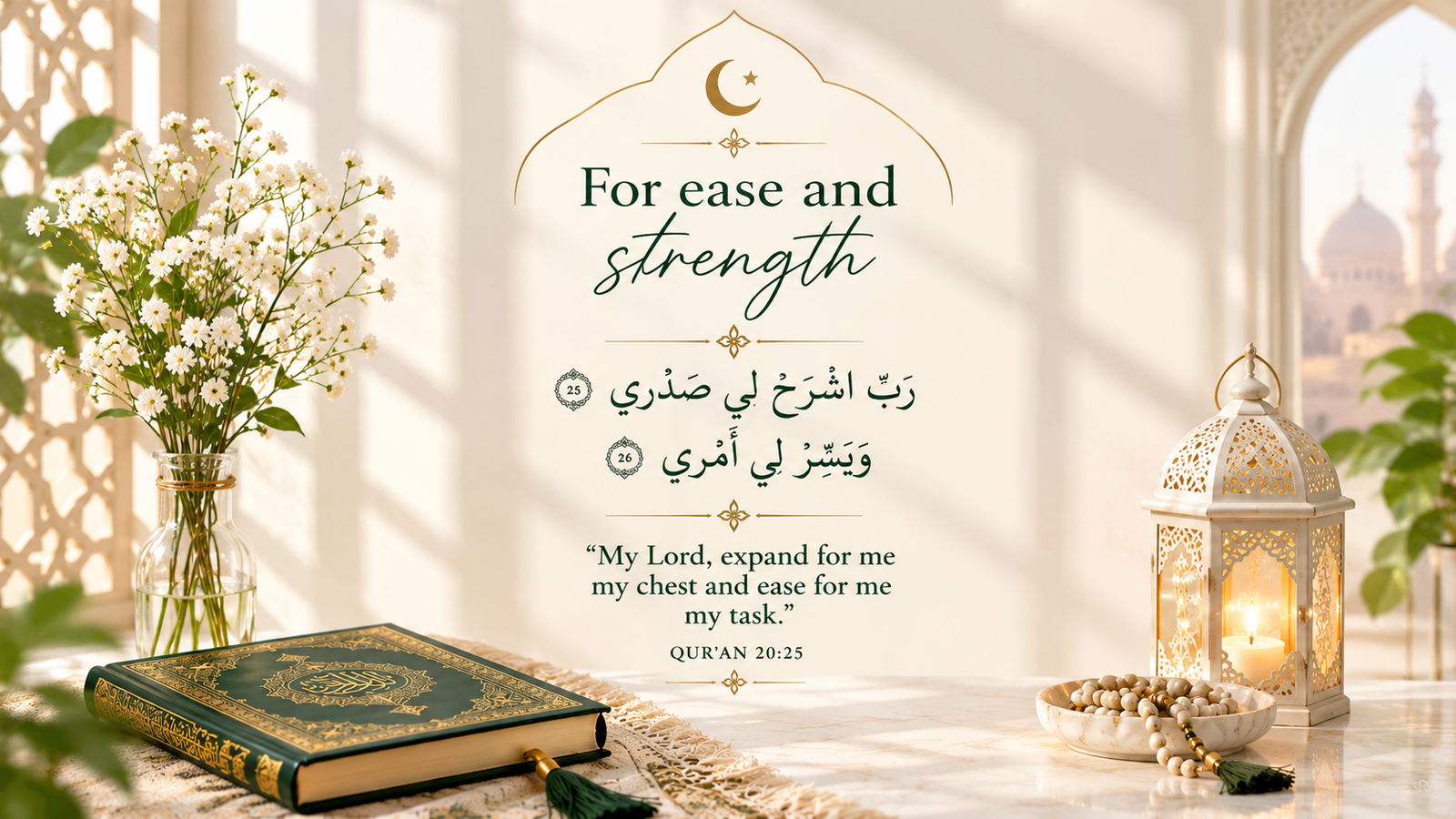
The mistake most people make is keeping their dua vague. Allah knows everything, but specificity in supplication is an act of trust and honesty. Name what is hurting you. Name what you need strength to face. If it is a broken relationship, say so. If it is financial ruin, say so. If it is grief that will not lift, say so. The Quran records the Prophet Ayyub (Job) saying directly: “Indeed, adversity has touched me, and you are the Most Merciful of the merciful” (Surah Al-Anbiya, 21:83). He did not dress up his pain. He stated it plainly and trusted Allah with it.
Step 4: Use the Authenticated Duas and Add Your Own Words
Combine the Quranic and prophetic duas listed above with your own sincere words in any language. Scholars including Sheikh Ibn Baz confirmed that making dua in one’s native language is valid and appropriate, particularly for personal needs. The prophetic duas establish the theological framework; your personal words fill it with the specific weight of your life.
Step 5: Close with Certainty, Not Uncertainty
End your dua with conviction that Allah has heard it, because He has. The Prophet (peace be upon him) said, as recorded in Tirmidhi: “Call upon Allah while being certain of being answered.” Doubt in the moment of dua does not nullify the dua, but certainty amplifies its effect on your own heart. That internal shift, from feeling unheard to knowing you have been heard, is itself part of the healing that Islamic prayer for strength provides.
Quranic Verses About Sabr That Sustain You Between Duas
Dua is the act of asking. But the Quran also works on the believer through recitation and reflection, building the internal architecture of patience over time. Several verses function both as supplications and as reminders that reshape how you understand what you are going through.
Surah Ash-Sharh (94:5-6) repeats a promise twice in consecutive verses: “For indeed, with hardship will be ease. Indeed, with hardship will be ease.” Classical scholars noted that in Arabic, when “hardship” (al-‘usr) is mentioned with the definite article (al), it refers to a specific, singular hardship. When “ease” (yusr) is mentioned without it, it implies an indefinite, dua for sabr and strength potentially multiple ease. In other words, your specific hardship is accompanied by more than one ease. That is not poetry. That is grammar carrying theological weight.
Surah Al-Anfal (8:46) adds another layer: “And be patient. Indeed, Allah is with the patient.” The Arabic construction “ma’a” (with) implies active accompaniment, not distant observation. Allah is not watching you struggle from a place removed from your pain. He is present within it, and that presence is what makes the bearing of difficulty different for a believer than for anyone else.
Common Misconceptions About Dua for Patience and Strength
Several misunderstandings prevent people from making dua effectively, particularly during hardship.
Misconception 1: If my situation does not change, my dua was rejected. What actually happens is that Allah responds to every sincere dua in one of three ways, as the Prophet (peace be upon him) explained in a hadith recorded by Ahmad: the specific request is granted, something harmful is averted in exchange, or the reward is stored for the h
Conclusion
Dua for sabr and strength is a way to ask Allah for help when things get hard. When you pray with honesty remember Allah and trust in His plan you can feel hope, courage and patience. These things help you face life’s moments.
Sabr is not about quitting. It is about staying strong, dua for sabr and strength in your faith. It means keeping up with what’s right even when life feels heavy. I see you keep going in your faith when it is hard. That’s what sabr really is.
When you make dua for sabr dua for sabr and strength and strength you’re asking Allah to help you stay calm and steady. You’re asking Him to give you the power to keep moving.. That’s something every person needs sometimes.
It’s okay to feel weak.. With dua, for sabr and strength you can find the inner peace to carry on. You’re not alone. Allah is always there listening.. He gives strength to those who truly seek it.
FAQs
What is the best dua for sabr and strength?
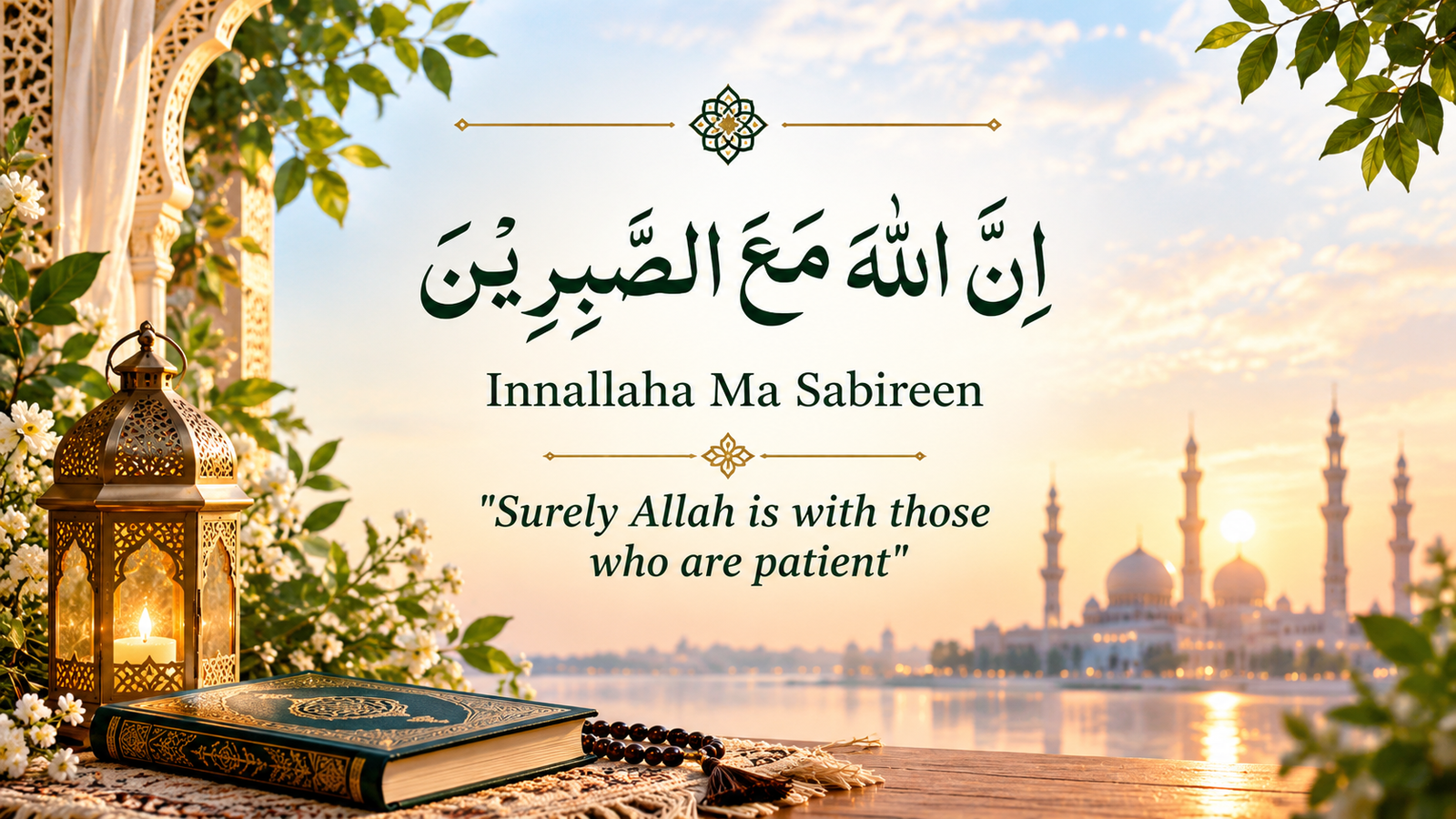
A beautiful dua for patience is: “Rabbana afrigh ‘alayna sabran wa thabbit aqdamana” (Surah Al-Baqarah 2:250). This dua asks Allah for patience (sabr) and firmness.
Which Surah should I read for patience and strength?
You can read Surah Al-Baqarah, Surah Ash-Sharh and Surah Yusuf. These verses give reflection, dua for sabr and strength comfort and reminders of patience when times are hard.
How can I ask Allah for sabr during times?
Make dua. Pray every day. Remember Allah with dhikr. Trust His wisdom. Take steps to beat your difficulties.
Can I make dua for sabr in my words?
Yes you can say your dua to Allah for patience, strength, guidance and peace of heart.
What are the benefits of making dua for sabr and strength?
Dua can help you feel close, to Allah. It strengthens your faith. It reminds you to stay sabr) dua for sabr and strength and hopeful when hard times come. The power of dua is great.

Leave a Reply