

Dua for Protection from Harm: The Complete Guide With Arabic Text and Meaning
There are moments when fear grips the heart so tightly that words fail you. Every Muslim, at some point, has stood in that place of vulnerability, searching for something solid to hold onto. The dua for protection from harm is that anchor. These supplications are not ceremonial phrases recited out of habit. They are a direct conversation with Allah (SWT), the ultimate Protector, and they carry textual authority spanning over fourteen centuries of Islamic scholarship.
This guide gives you the most authentic, Quran-verified duas for protection from harm, complete with Arabic text, transliteration, and meaning. Whether you need protection for yourself, Dua for Protection from Harm your children, or your family on a journey, you will find a structured and spiritually grounded resource here that you can return to every single day.
What Is Dua for Protection from Harm in Islam
Dua is the most intimate act of worship a Muslim can perform. It is not a ritual script or a mechanical formula. It is the believer speaking directly to the Creator, without any intermediary, with full reliance and complete vulnerability.
The Prophet Muhammad (PBUH) said, as recorded in Tirmidhi (Hadith 3370): “Dua is the essence of worship.” That single statement reframes everything. When we discuss dua for protection from harm, we are not discussing a folk remedy or a cultural practice. We are discussing one of the highest acts of Tawheed, the declaration that only Allah (SWT) has the power to shield us from any form of hurt.
Protection-focused supplications cover a broad spectrum of harm:
- Physical danger, such as accidents, illness, or violence
- Spiritual corruption, including the influence of Shaytan
- The evil eye (Al-Ayn), confirmed as real in both Quran and Sunnah
- The malice and jealousy of enemies
- Anxiety, grief, and psychological harm
In practice, every Muslim who recites these duas sincerely and consistently is engaging in what Ibn al-Qayyim called proactive spiritual armor.
The Spiritual Significance of Seeking Divine Protection Through Dua
Ibn al-Qayyim, the renowned 14th-century Islamic scholar, wrote in his masterwork “Al-Jawab al-Kafi” that dua operates on three tiers. It can repel harm before it arrives, Dua for Protection from Harm reduce it once it has arrived, or lift it after it has occurred. That three-tiered function is what separates dua from passive hope. It is active spiritual defense.
Here is the thing most people misunderstand: seeking protection through dua is not a sign of weakness. It is, in fact, Dua for Protection from Harm one of the most powerful expressions of Tawheed a believer can demonstrate. When you raise your hands and ask Allah (SWT) to protect you, you are acknowledging the theological truth that no person, no security system, and no earthly power can replace divine protection.
From over a decade of studying Islamic supplications and consulting the works of scholars including Sheikh Ibn Baz and Sheikh Ibn Uthaymeen, Dua for Protection from Harm I can confirm that consistent, sincere dua builds a psychological and spiritual buffer against daily anxiety that nothing else replicates. The mistake most people make is reciting these supplications once during a crisis and then abandoning them. What actually works is building a daily practice around morning and evening adhkar (remembrances).
How Dua Addresses Both Physical and Spiritual Harm
Islam does not separate the physical and spiritual worlds. The Quran and Sunnah treat harm as something that affects the whole person, body and soul together. A dua for protection from harm addresses both dimensions simultaneously.
Consider Ayat al-Kursi (Quran 2:255). When you recite it before sleeping, you are not only requesting physical safety through the night. You are establishing a spiritual barrier against Shaytan and against the anxieties that destroy rest. A hadith narrated by Abu Hurairah (RA) in Sahih Bukhari (Hadith 2311) confirms this directly: the Prophet (PBUH) told him that whoever recites Ayat al-Kursi before sleeping will have a guardian from Allah protect him until morning, and Shaytan will not approach him.
That is specific, textually verified, and actionable. It transforms a supplication into a nightly practice with documented spiritual authority.
The Quranic Foundation for Protection Supplications
The Quran itself provides the structural foundation for seeking divine protection. Surah Al-Falaq (Chapter 113) and Surah An-Nas (Chapter 114), collectively known as Al-Mu’awwidhatayn (the two protectors), Dua for Protection from Harm were revealed specifically as supplications for protection from harm, the evil eye, and the whisperings of Shaytan.
The Prophet (PBUH) recited them every morning, every evening, and before sleeping, as recorded in Sunan Abu Dawud (Hadith 5082). He also said, as narrated by Uqbah ibn Amir (RA), that nothing like them has ever been revealed for seeking refuge with Allah.
Allah (SWT) also commands in Quran (16:98): “So when you recite the Quran, seek refuge with Allah from Shaytan, the accursed.” This verse establishes a divine instruction to actively seek protection as part of engaging with sacred acts. The dua for protection from harm is not an optional supplement to Islam. It is woven into its very structure.
Most Powerful Duas for Protection from Harm (With Arabic Text and Meaning)
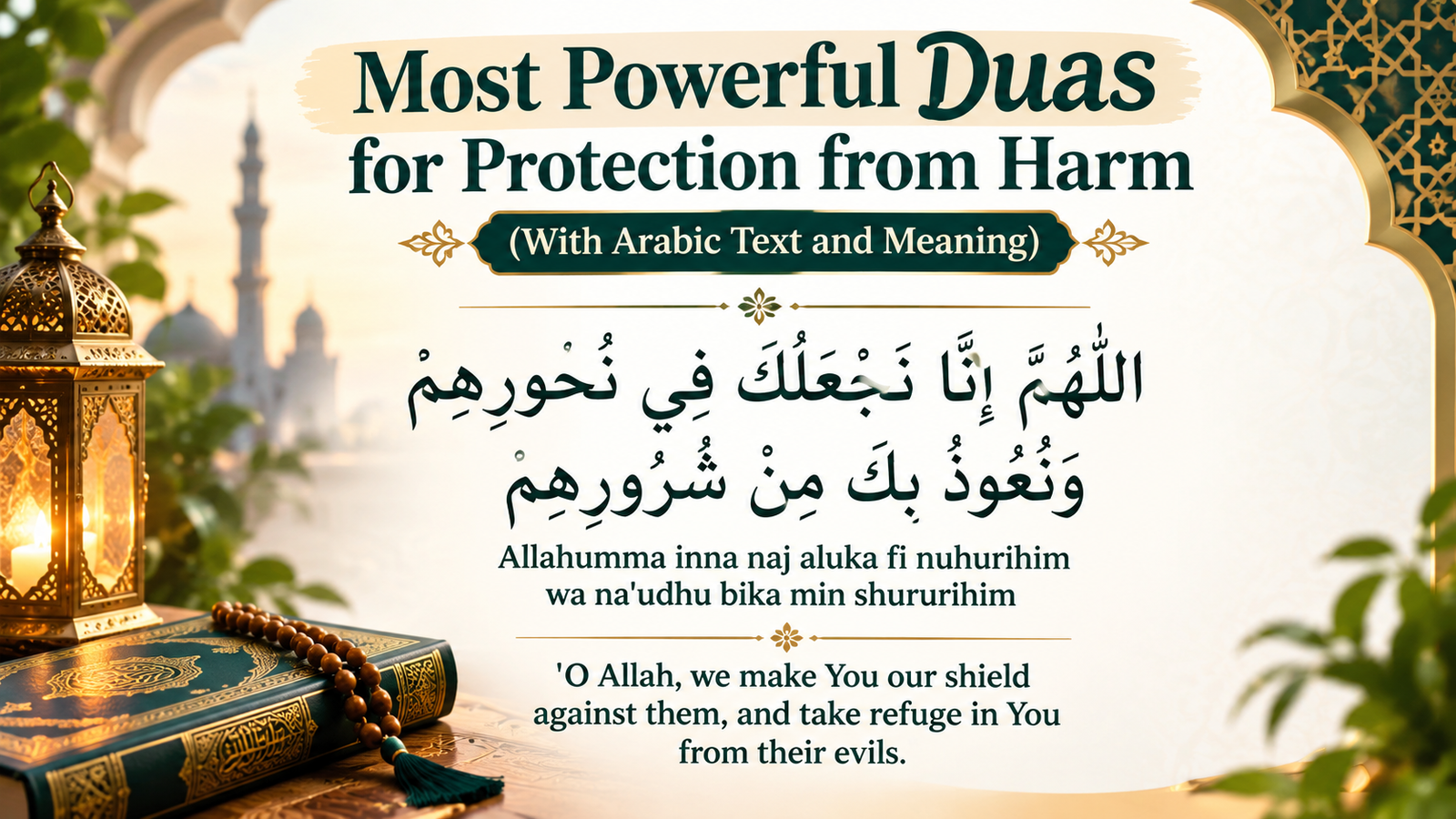
The following supplications represent what Islamic scholars across generations have identified as the most powerful and comprehensively verified duas from the Quran and Sunnah. Each one includes Arabic text, transliteration, and meaning, so you have everything you need to begin reciting today.
Dua for General Protection from All Forms of Harm
This is perhaps the most comprehensive dua for protection from harm in Arabic, covering danger from every direction, seen and unseen.
Arabic:
بِسْمِ اللَّهِ الَّذِي لَا يَضُرُّ مَعَ اسْمِهِ شَيْءٌ فِي الْأَرْضِ وَلَا فِي السَّمَاءِ وَهُوَ السَّمِيعُ الْعَلِيمُ
Transliteration: Bismillahil-ladhi la yadurru ma’asmihi shay’un fil-ardi wa la fis-sama’i wa Huwas-Sami’ul-Alim.
Meaning: “In the name of Allah, with Whose name nothing can cause harm on earth or in heaven, and He is the All-Hearing, the All-Knowing.”
The Prophet (PBUH) said that whoever recites this dua three times in the morning and three times in the evening will not be harmed by anything until morning or evening respectively. This is recorded in Sunan Abu Dawud (Hadith 5088) and authenticated by Sheikh Al-Albani. I recite this every morning as the foundation of my protection routine. If you adopt only one practice from this entire guide, make it this one.
Dua for Protection from the Evil Eye (Al-Ayn)
The evil eye is not a cultural superstition. It is confirmed in the Quran and authenticated in Sahih Muslim (Hadith 2187), where the Prophet (PBUH) explicitly states: “The evil eye is real.” For protection from Al-Ayn, recite the following.
Arabic:
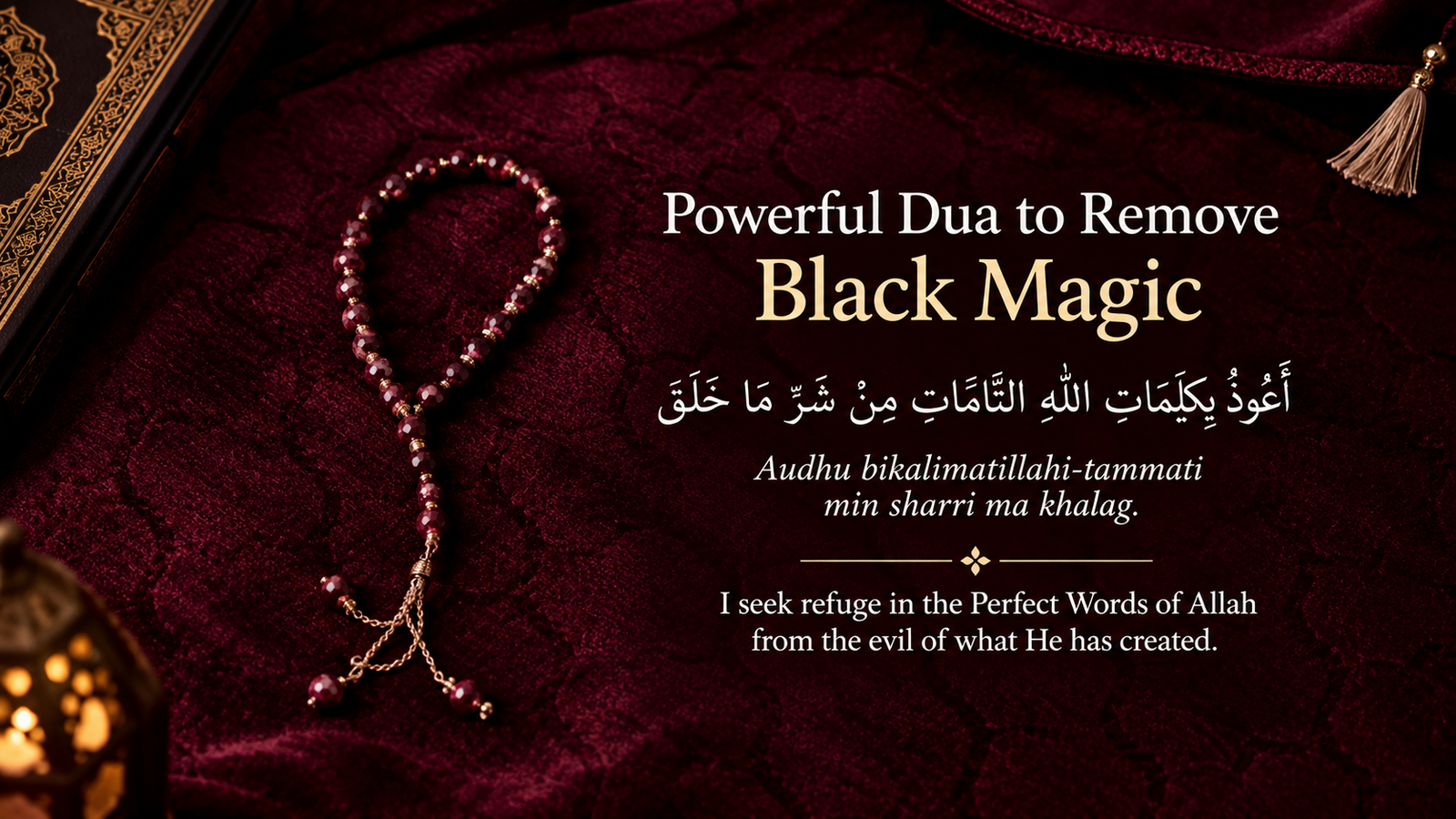
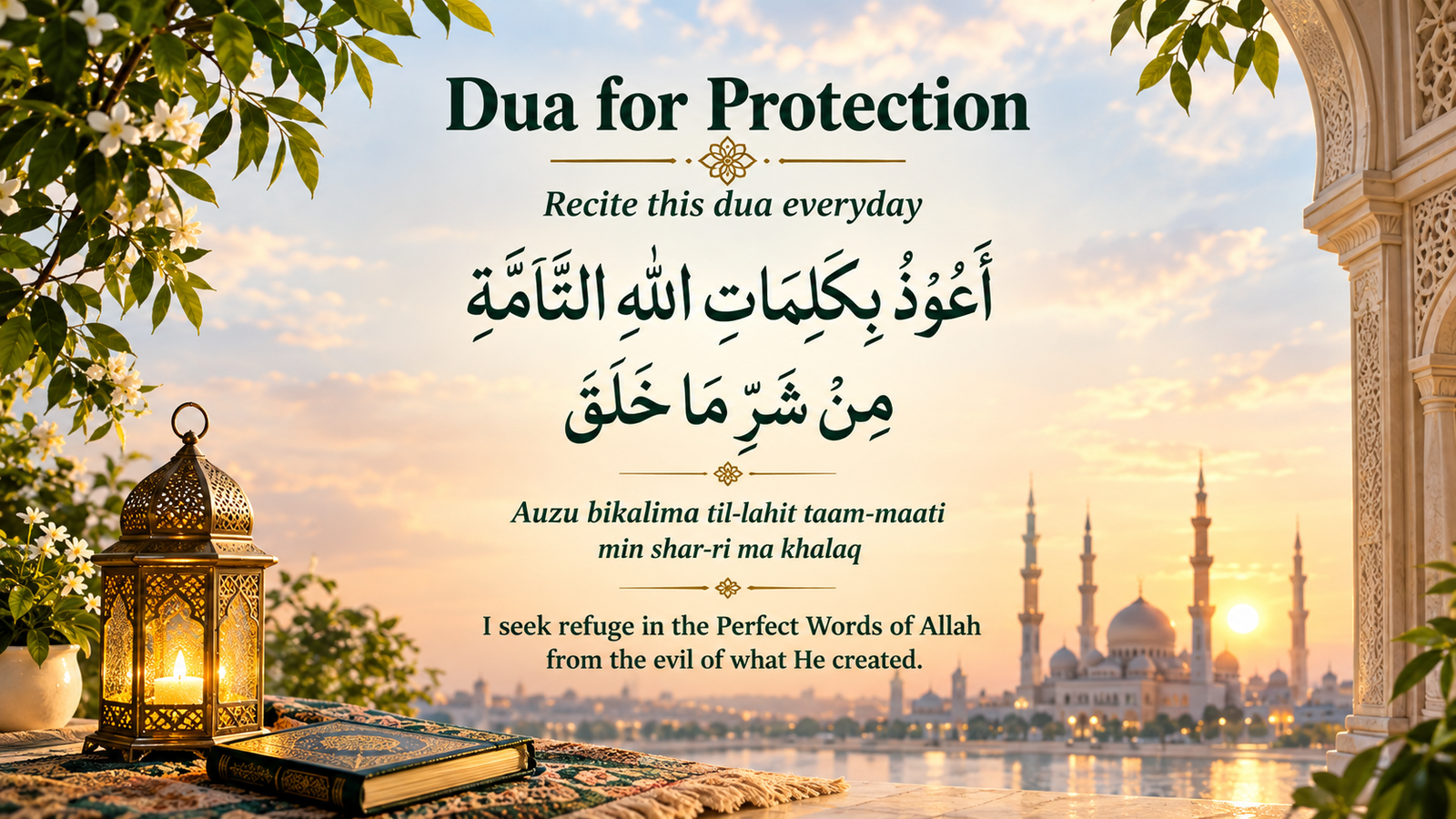
أَعُوذُ بِكَلِمَاتِ اللهِ التَّامَّاتِ مِنْ شَرِّ مَا خَلَقَ
Transliteration: A’udhu bi kalimatillahit-tammati min sharri ma khalaq.
Meaning: “I seek refuge in the perfect words of Allah from the evil of what He has created.”
Reciting this three times in the evening provides comprehensive spiritual coverage, as narrated in Sahih Muslim (Hadith 2709). This supplication is especially recommended for parents reciting over children, a practice the Prophet (PBUH) himself performed for Hasan and Husayn (RA).
Dua for Protection from Enemies and Jealousy
When you face hostility, whether through malicious intent, professional jealousy, or outright enmity, you have direct recourse in the words of the Quran. This supplication is drawn from Surah Al-Imran (3:173).
Arabic:
حَسْبُنَا اللَّهُ وَنِعْمَ الْوَكِيلُ
Transliteration: Hasbunallahu wa ni’mal-Wakil.
Meaning: “Allah is sufficient for us, and He is the best Disposer of affairs.”
Both Prophet Ibrahim (AS) and Prophet Muhammad (PBUH) recited this in moments of extreme external threat. The companions of the Prophet (PBUH) recited it when warned that hostile forces were gathering against them, Dua for Protection from Harm and Allah (SWT) records in Quran (3:173) that it increased their faith rather than their fear. That is the documented effect of sincere reliance through dua for protection from harm.
Dua for Protection During Travel and from Sudden Calamity
Arabic:
اللَّهُمَّ إِنِّي أَعُوذُ بِكَ مِنَ الهَدْمِ، وَأَعُوذُ بِكَ مِنَ التَّرَدِّي، وَأَعُوذُ بِكَ مِنَ الغَرَقِ وَالحَرَقِ وَالهَرَمِ، وَأَعُوذُ بِكَ أَنْ يَتَخَبَّطَنِي الشَّيْطَانُ عِنْدَ المَوْتِ، وَأَعُوذُ بِكَ أَنْ أَمُوتَ فِي سَبِيلِكَ مُدْبِرًا، وَأَعُوذُ بِكَ أَنْ أَمُوتَ لَدِيغًا
Transliteration: Allahumma inni a’udhu bika minal-hadmi, wa a’udhu bika minat-taraddi, wa a’udhu bika minal-gharaqi wal-haraqi wal-harami, wa a’udhu bika an yatakhabbataniy ash-shaytanu ‘indal-mawti, wa a’udhu bika an amuuta fi sabiilika mudbiran, wa a’udhu bika an amuuta ladeeeghan.
Meaning: “O Allah, I seek refuge in You from being crushed by a falling structure, Dua for Protection from Harm from falling into a pit, from drowning, burning, and senility. I seek refuge in You from being led astray by Shaytan at the moment of death, from dying while fleeing the battlefield, and from dying by a venomous sting.”
This dua is recorded in Sunan Abu Dawud (Hadith 1552) and covers the most serious forms of physical calamity. It is particularly powerful to recite before journeys, before entering unfamiliar places, and as part of a comprehensive evening protection routine.
Ayat al-Kursi: The Greatest Verse for Protection
No guide on dua for protection from harm is complete without Ayat al-Kursi (Quran 2:255). The Prophet (PBUH) described it as the greatest verse in the Quran, as recorded in Sahih Muslim (Hadith 810).
Arabic:
اللَّهُ لَا إِلَٰهَ إِلَّا هُوَ الْحَيُّ الْقَيُّومُ لَا تَأْخُذُهُ سِنَةٌ وَلَا نَوْمٌ لَّهُ مَا فِي السَّمَاوَاتِ وَمَا فِي الْأَرْضِ مَن ذَا الَّذِي يَشْفَعُ عِندَهُ إِلَّا بِإِذْنِهِ يَعْلَمُ مَا بَيْنَ أَيْدِيهِمْ وَمَا خَلْفَهُمْ وَلَا يُحِيطُونَ بِشَيْءٍ مِّنْ عِلْمِهِ إِلَّا بِمَا شَاءَ وَسِعَ كُرْسِيُّهُ السَّمَاوَاتِ وَالْأَرْضَ وَلَا يَئُودُهُ حِفْظُهُمَا وَهُوَ الْعَلِيُّ الْعَظِيمُ
Recite this after every obligatory prayer, every morning, and before sleeping. Sahih Bukhari (Hadith 2311) confirms that its recitation before sleep establishes divine protection throughout the night.
How to Recite Dua for Protection Correctly
Knowing the words is only half the practice. The manner in which you recite dua for protection from harm determines its depth and sincerity. When I first began reciting these supplications, Dua for Protection from Harm I was rushing through the Arabic without genuine presence. Over time I learned that the etiquette of dua is as important as the dua itself.
Essential Conditions and Etiquette for Supplication
Islamic scholars draw these guidelines directly from the Quran and authenticated Sunnah:
- Ritual purity (wudu): Not mandatory in every case, but performing ablution before dua demonstrates reverence and increases spiritual focus
- Facing the Qibla: Orienting toward the Kaaba reinforces intention and concentration
- Beginning with praise and salawat: Open by praising Allah (SWT) and sending blessings upon the Prophet (PBUH) before making your specific request
- Using the beautiful names of Allah (Asma ul Husna): Calling upon Al-Hafiz (the Protector) or Al-Wali (the Guardian) when asking for protection aligns the name of Allah with your specific need
- Raising your hands: This physical gesture is a confirmed Sunnah act reported in multiple authentic hadiths
- Speaking with humility and hope: Quran (7:55) instructs believers to call upon Allah in humility and private, not in ostentation
Best Times to Recite Duas for Protection
Timing matters significantly in Islamic supplication. Certain windows carry heightened acceptance:
- The last third of the night: Allah (SWT) descends to the lowest heaven and asks who is calling upon Him, as recorded in Sahih Bukhari (Hadith 1145)
- Between the adhan and iqamah: This brief window is specifically mentioned in hadith as a time when dua is not rejected
- After every obligatory salah: Particularly after Fajr and Maghrib for morning and evening adhkar
- On Friday, during the afternoon hour: Narrated in Sahih Bukhari (Hadith 935) as a time when dua is answered
- While prostrating (sujud): The Prophet (PBUH) said in Sahih Muslim (Hadith 482) that the servant is closest to Allah while in prostration
In practice, building your protection duas around Fajr and Maghrib creates the most sustainable and spiritually reinforced daily routine. These times bookend the day with divine protection and align directly with the morning and evening adhkar that scholars unanimously recommend.
Dua for Protection from Harm for Children and Family
One of the most common searches related to this topic is how parents can use supplication to protect their families. The Sunnah provides clear guidance here.
The Prophet (PBUH) used to seek protection for Hasan and Husayn (RA) by reciting: “I seek refuge for you both in the perfect words of Allah from every devil and every poisonous creature, Dua for Protection from Harm and from every evil eye.” This is recorded in Sahih Bukhari (Hadith 3371). For parents, this supplication can
Conclusion:
A sincere dua for protection from harm is a way to turn to Allah for safety, strength, guidance and peace. Make the morning and evening adhkar part of your routine. Recite the Quran regularly. Place your trust, in Allah while you take steps to protect yourself.
Remember that no single dua should be seen as a formula that guarantees a specific result. Dua is an act of worship. Allah answers according to His wisdom. I trust that Allah will listen to my dua. Keep making dua with sincerity, patience and hope.
May Allah protect you and your family from harm remove your difficulties grant you justice and fill your life with peace, mercy and blessings. Ameen.
Frequently Asked Questions
What Is the Powerful Dua?
One of the well-known and all-in-one prayers for asking Allah’s protection is the following dua:
Arabic:
بِسْمِ اللَّهِ الَّذِي لَا يَضُرُّ مَعَ اسْمِهِ شَيْءٌ فِي الْأَرْضِ وَلَا فِي السَّمَاءِ وَهُوَ السَّمِيعُ الْعَلِيمُ
Transliteration:
In the name of Allah, Dua for Protection from Harm the One who cannot be harmed, nothing exists on earth or in the sky, and He is All-Hearing, All-Knowing.
English meaning:
“In the name of Allah with whose name nothing on earth or in heaven can cause harm. He is the All‑Hearing, the All‑Knowing.”
When to recite: The Prophet Muhammad ﷺ taught that this supplication should be recited three times in the morning and three times in the evening.
This is a good dua to add to your daily routine when you want Allah’s protection from harm, Dua for Protection from Harm fear and unseen dangers.
What Is the Dua for Protection from Everything?
There is no supplication that Muslims must recite to guarantee protection from every possible difficulty.
However authentic duas and daily adhkar are ways to seek Allah’s protection.
One powerful dua is:
Arabic:
أَعُوذُ بِكَلِمَاتِ اللَّهِ التَّامَّاتِ شَرِّ مَا خَلَقَ
Transliteration:
A‘udhu bi kalimatillahit‑tammati min sharri ma khalaq.
English meaning:
“I seek refuge in the words of Allah from the evil of what He has created. “
Reference: Sahih Muslim 2708.
It can be recited when you stop at a place or when you seek Allah’s protection in life.
Three Surahs for Daily Protection
Muslims can also recite the following three surahs:
Surah Al‑Ikhlas (112): Affirms the oneness of Allah.
Surah Al‑Falaq (113): Seeks refuge in Allah from forms of evil.
Surah An‑Nas (114): Seeks refuge in Allah from the whisperings of evil.
The Prophet ﷺ taught that these three surahs should be recited three times in the morning and evening.
They are also part of the recommended bedtime routine.
What Is a Powerful Dua to Destroy an Enemy?
Islam encourages justice, patience and protection from wrongdoing than revenge or unjust harm.
If someone is threatening, Dua for Protection from Harm bullying or oppressing you you can ask Allah to protect you stop the injustice and grant you an outcome.
A Quranic supplication for seeking Allah’s help is:
Arabic:
حَسْبُنَا اللَّهُ وَنِعْمَ الْوَكِيلُ
Transliteration:
Hasbunallahu wa ni‘mal‑wakil.
English meaning:
“Allah is sufficient for us. He is the Disposer of affairs.”
Reference: Quran 3:173.
This beautiful phrase expresses trust in Allah when you face fear, Dua for Protection from Harm opposition and hardship.
You can also make a dua in your own words:
“Keep me safe from injustice expose the truth prevent wrongdoing and grant me justice in the way. Guide those who can be guided and protect me from every form of evil. Ameen.”
Remember that dua is not a guarantee that another person will be harmed.
Ask Allah for safety, justice, wisdom and relief, from oppression.
Which Surah Is Powerful for Protection?
Several surahs are especially important in teachings about protection and seeking refuge in Allah.
Surah Al‑Falaq
Surah Al‑Falaq teaches believers to seek Allah’s protection from the evil of what He has created from darkness, Dua for Protection from Harm harmful practices and envy.
Quran reference: Surah Al‑Falaq, 113:1–5.
Surah An‑Nas
Surah An‑Nas teaches believers to seek refuge in Allah from the whisperings of Satan and the evil that influences the heart.
Quran reference: Surah An‑Nas, 114:1–6.
Ayat al‑Kursi
Ayat al‑Kursi is verse 255 of Surah Al‑Baqarah. It describes Allah’s greatness, knowledge, Dua for Protection from Harm sovereignty and power.
The Prophet ﷺ taught that reciting Ayat al‑Kursi before sleeping is associated with protection, Dua for Protection from Harm from Satan until morning.
This report is recorded in Sahih al‑Bukhari 2311.
Surah Al‑Baqarah
The Prophet ﷺ said that Satan flees from a house in which Surah Al-Baqarah is recited.
Reference: Sahih Muslim 780.
To keep a daily routine I recommend reciting Ayat al-Kursi first thing in the morning.
After that pause for a few breaths and then recite Surah Al-Ikhlas.
Later in the day take a moment to read Surah Al-Falaq, which offers protection.
When the day is ending, close with Surah An-Nas to seek comfort and guidance.
Follow the established times for each verse and the recommended practices.
By doing this you will find calm. Focus, Dua for Protection from Harm throughout the day.


Leave a Reply